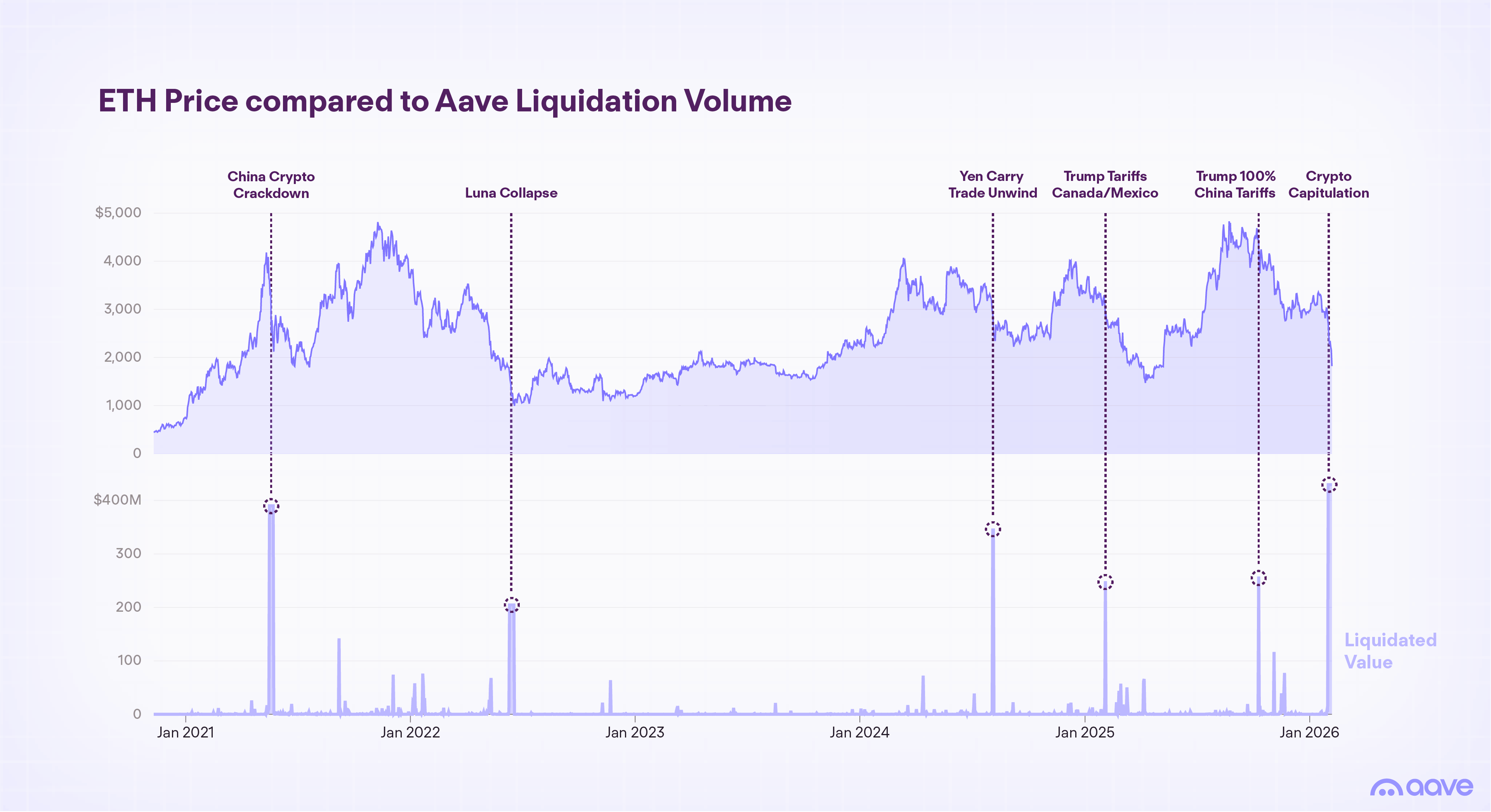
A DeFi liquidation is the moment a lending protocol sells part of your collateral to pay down your loan. It is automatic, it is fast, and it does not wait for you to answer an email. If you borrow against crypto on-chain, liquidation risk is the single most important number to manage — more important than the interest rate, and more important than which token you borrow.
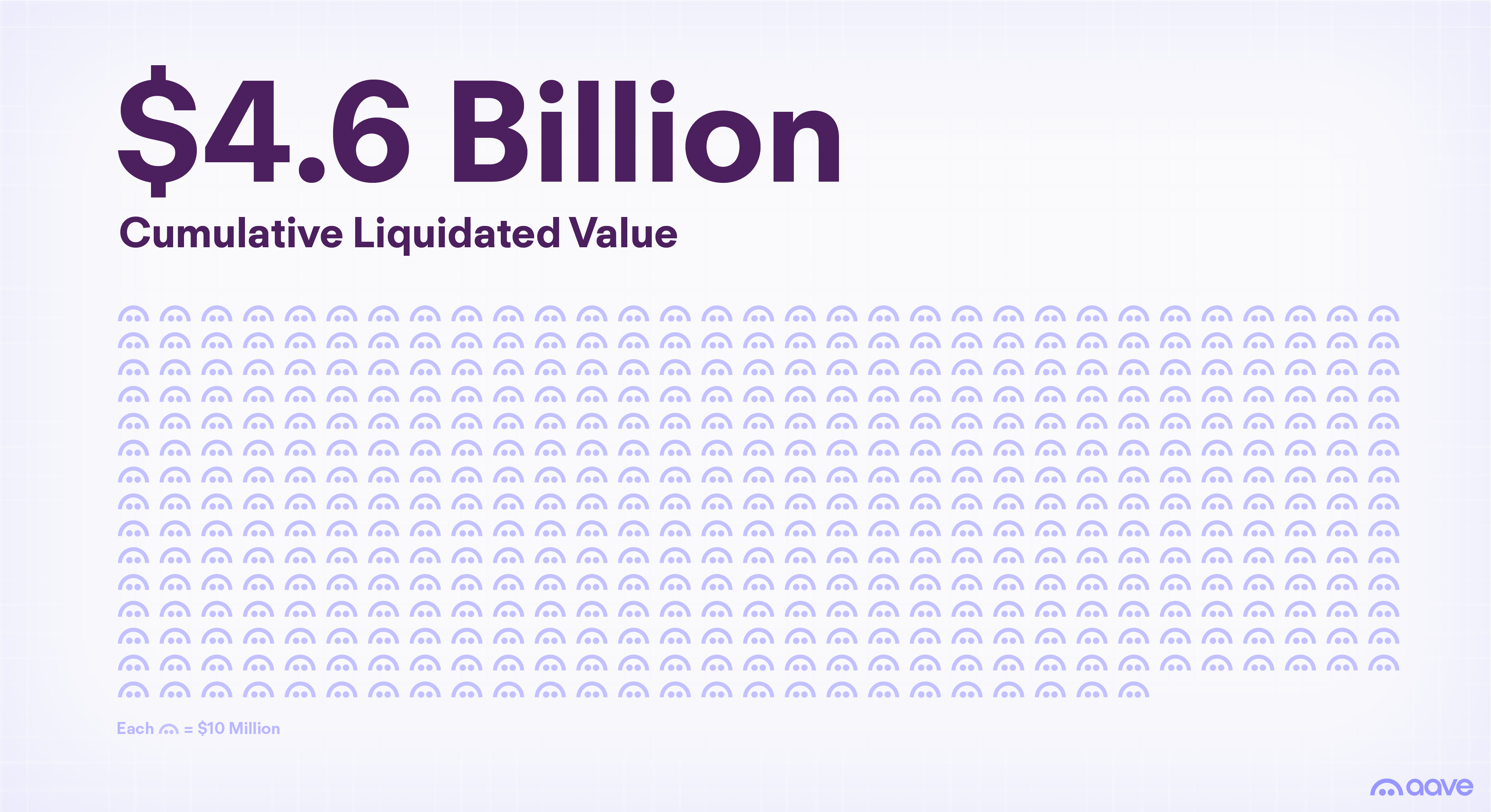
The scale is larger than most new borrowers expect. Aave, the largest on-chain lending protocol, reported $4.6 billion in cumulative liquidated value across its markets in an October 2025 analysis of how its liquidation system performed during volatile periods. That figure is not a sign the system is broken. It is the system working: every one of those liquidations closed a risky loan before it could become bad debt for lenders.
Image: Aave — cumulative liquidated value across Aave markets, from the protocol's October 2025 liquidation performance report.
This guide explains the mechanics in plain language: what a health factor is, what actually happens when a position is liquidated, how newer liquidation engines reduce the penalty, and the specific habits that keep borrowers out of trouble. If you are still deciding whether to borrow on-chain at all, our walkthrough of how to borrow against crypto covers the setup steps, and our review of DeFi lending risks puts liquidation in context next to smart-contract and oracle risk.
Quick solution
If you want the short version, here it is. Borrow no more than half of what the protocol allows against your collateral, so a normal 30% price drop cannot touch you. Watch one number — your health factor — and treat 1.5 as your action line: below it, either repay part of the loan or add collateral the same day. Borrow stablecoins rather than volatile tokens, so your debt does not grow when the market moves. Set a price alert on your collateral asset so you are never surprised. Do those four things and you will sit far away from the liquidation threshold that catches over-leveraged borrowers in every drawdown.
Every DeFi loan is overcollateralized. You deposit, say, $10,000 of ETH and borrow $4,000 of a stablecoin against it. The protocol never knows who you are, so it cannot chase you for repayment. Its only protection is the collateral itself. That means it must be able to sell your collateral the moment the loan gets too close to the collateral's value.
The measuring stick is the health factor. It is a single number computed from three inputs: the current market value of your collateral, the liquidation threshold the protocol assigns to that asset (for example, 80% for a major asset), and the size of your debt. When the health factor is above 1, your loan is safe. When it falls below 1, any liquidator — usually an automated bot — can step in, repay a slice of your debt, and take a matching slice of your collateral plus a bonus.
That bonus is the penalty you pay. On Aave V3, the liquidation bonus is a static percentage of the collateral seized, and the amount repaid follows a fixed close factor — commonly half the debt in one transaction. So a liquidation on a $4,000 loan could repay $2,000 of debt and seize roughly $2,100 or more of your collateral, with the difference going to the liquidator as their incentive for acting fast.
Two things about this process surprise first-time borrowers. First, there is no margin call. Unlike a broker or a centralized lender, no one phones you or gives you 24 hours to top up. The blockchain does not pause overnight or on weekends. Second, a liquidation does not usually close your whole position. It trims it until the health factor recovers, which means one bad hour can cost you the penalty on a large chunk of collateral while still leaving you with a smaller, riskier loan.
What triggers liquidations in practice
Liquidations cluster around fast price moves. Aave's October 2025 performance report examined its liquidation history through the market's most violent days and found the system processed billions in liquidations without accumulating meaningful bad debt — precisely because bots compete to liquidate risky positions within seconds of the health factor crossing 1.
The company's September 2025 crypto-backed loans overview puts the event count in perspective: more than $3 billion of that liquidated value came from over 250,000 individual liquidation events. Divide one number by the other and the average event is around $12,000 — these are not just whales. Ordinary borrowers with four- and five-figure loans make up the bulk of liquidations, usually because they borrowed close to the maximum and had no plan for a 20% drawdown.
Three triggers account for most events:
- A drop in collateral price. The obvious one. If ETH falls 25% and you borrowed at 65% of your limit, your health factor can slide under 1 in hours.
- Growth in the debt side. If you borrowed a volatile token instead of a stablecoin, your debt rises when that token rallies — even if your collateral held steady. This catches borrowers who short through lending markets.
- Interest quietly compounding. Borrow rates on-chain float with utilization. A loan left unattended for months at a rising rate accrues debt that erodes the health factor with no price move at all. Our guide to DeFi lending rates explains how those floating rates are set.
Oracle behavior matters too. Protocols price your collateral with an oracle feed, not the exchange screen you happen to be watching. During sharp moves, the oracle price is the only one that counts, and brief wicks on thin markets have historically liquidated positions that looked safe on other screens minutes later.
How liquidation engines are changing
Liquidation design is not standing still, and the direction of travel favors borrowers. In December 2025, Aave detailed the liquidation engine for its V4 architecture, and the two headline changes both reduce how much a liquidation costs the borrower.
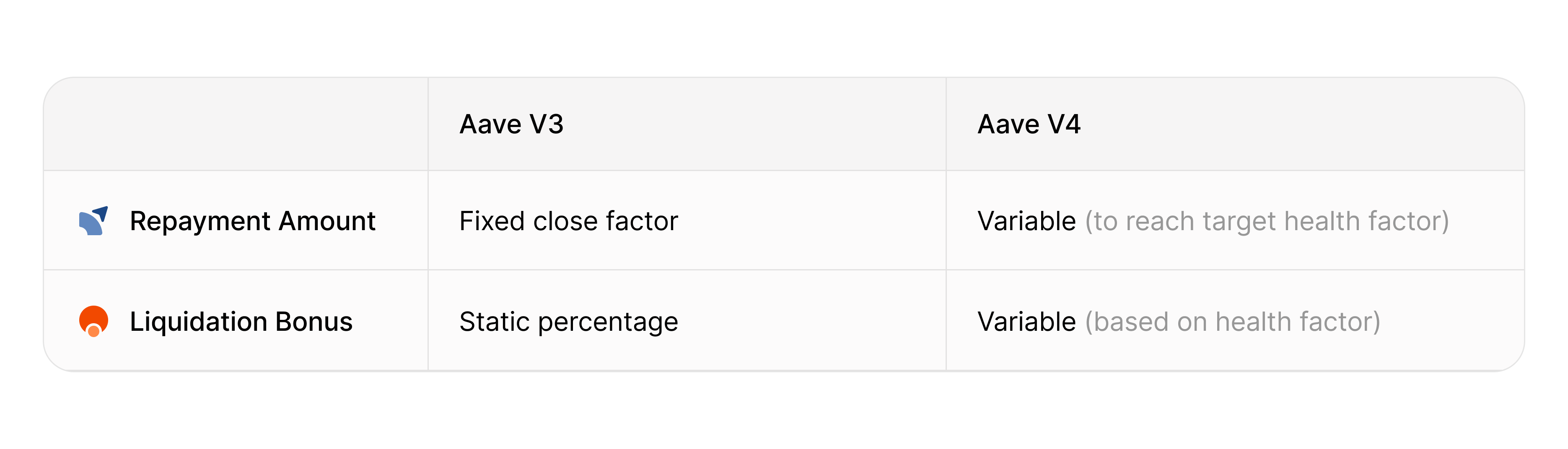
First, the repayment amount becomes variable. Instead of repaying a fixed half of your debt, a V4 liquidation repays only what is needed to restore your position to a Target Health Factor. A borrower who is barely underwater gets a small trim, not an automatic 50% haircut.
Second, the liquidation bonus becomes variable too. A position just below the threshold — "slightly unhealthy," in Aave's terms — pays a smaller bonus than one deep underwater. The penalty scales with how dangerous the position actually is, rather than applying one flat rate to everyone.
The table below compiles how the three models a borrower is likely to meet actually differ, based on Aave's V3 documentation, its December 2025 V4 engine announcement, and the margin-call process centralized lenders describe in their loan terms. The pattern to notice: on-chain engines are automatic but increasingly proportionate, while centralized desks give you a human warning but discretion cuts both ways. We compare those two worlds more broadly in DeFi versus CeFi lending.
| Feature | Aave V3 (static engine) | Aave V4 (variable engine) | CeFi margin call |
|---|---|---|---|
| Trigger | Health factor below 1 | Health factor below 1 | Lender's LTV limit, per contract |
| Amount repaid | Fixed close factor (commonly 50%) | Only enough to reach Target Health Factor | Lender's discretion |
| Penalty | Static bonus percentage | Variable bonus, scales with risk | Fees per contract, varies |
| Warning given | None — instant | None — instant | Usually notice, hours to days |
| Who executes | Open market of liquidator bots | Open market of liquidator bots | The lender itself |
Choose collateral the protocol treats gently
Not all collateral is equal, and the differences are published before you borrow. Each asset a protocol accepts carries its own loan-to-value cap, liquidation threshold, and bonus. Blue-chip assets with deep liquidity get higher thresholds and smaller penalties; volatile or thinly traded assets get conservative parameters because they are harder to sell in a crash.
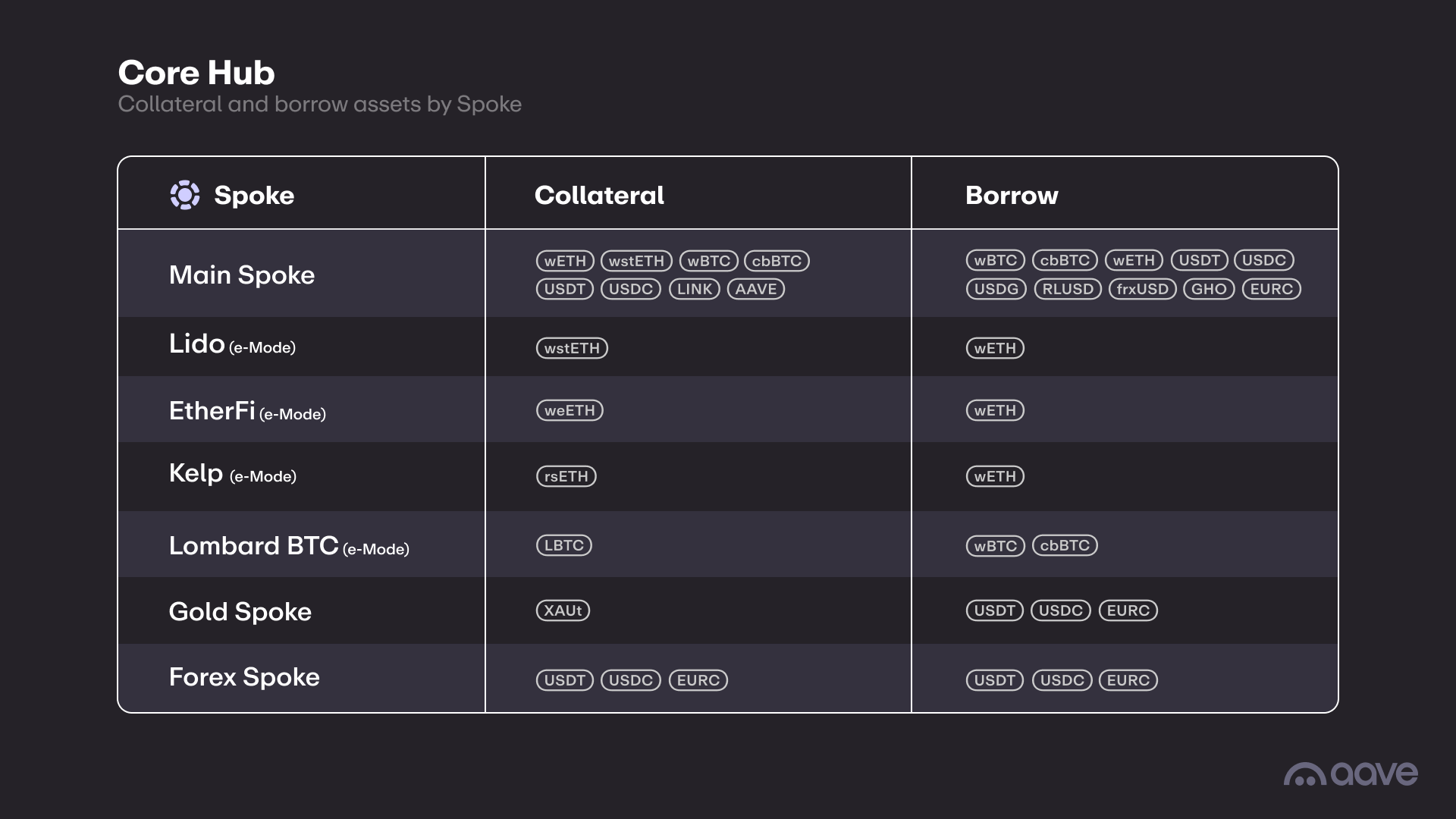
The listing above from Aave's V4 Ethereum deployment shows the shape of a modern lending market: a main spoke for major assets like wETH, wstETH, wBTC and the large stablecoins, plus specialized spokes where correlated pairs (like a staked-ETH token borrowed against ETH) get more efficient parameters because the two assets move together.
For a borrower trying to avoid liquidation, the collateral decision comes down to three habits. Prefer the deepest, most liquid asset you already hold rather than a small-cap token, because its threshold will be friendlier and its price gaps smaller. Borrow a stablecoin against volatile collateral rather than the reverse, so only one side of the ratio moves. And check the exact liquidation threshold for your specific asset on your specific network before you borrow — the same token can carry different parameters on different deployments.
The economics of on-chain borrowing are genuinely attractive — Aave's September 2025 overview cited typical on-chain stablecoin borrow rates of 4–6% against 8–12% at centralized crypto lenders — but the discount only pays off if you never hand it back through a liquidation penalty.
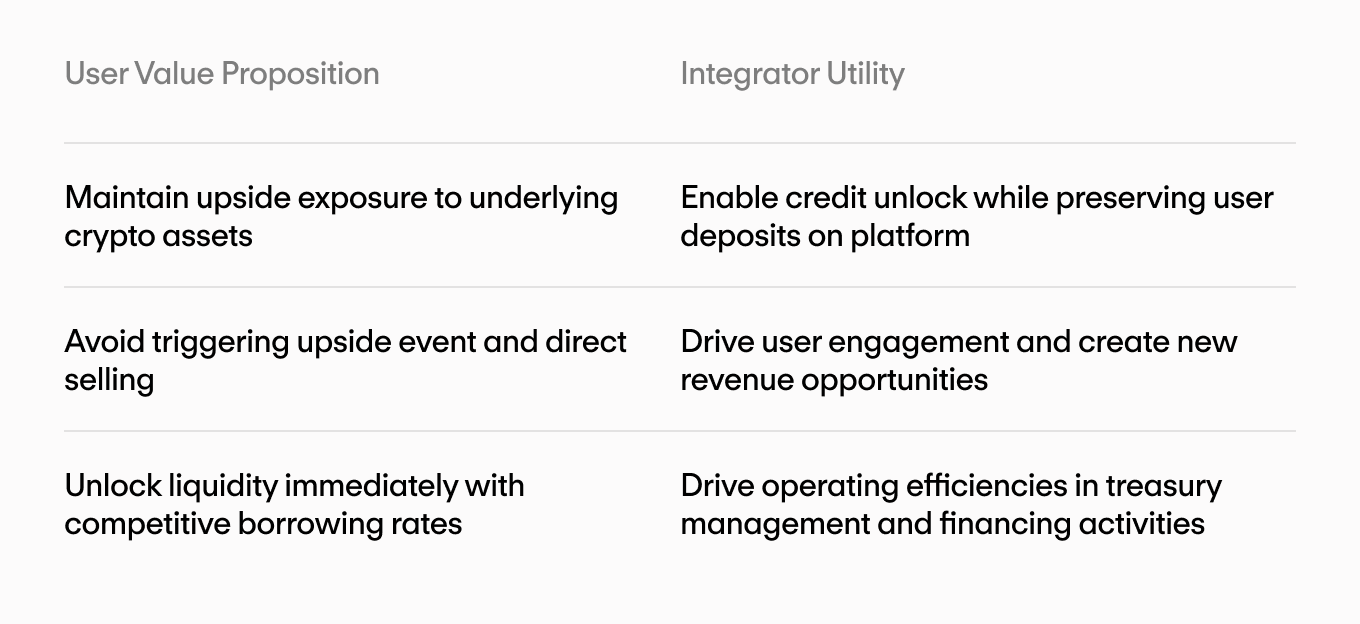
The mistakes below cover most real-world liquidations. Every one of them is avoidable with a rule you set before you borrow, not during the crash.
- Borrowing the maximum the interface allows. The max borrow puts your health factor barely above 1 on day one. A routine 10% dip liquidates you. Target 50% of the allowed maximum or less, which keeps your health factor near 2.
- Treating the loan as fire-and-forget. Floating rates and drifting prices move your health factor every day. Check it weekly at minimum, and set a price alert at the level where your health factor would hit 1.5.
- Having no prepared response. Decide in advance: at health factor 1.5, will you repay 20% of the debt or deposit more collateral? Keep that stablecoin buffer or spare collateral liquid and ready. During a crash, gas fees spike and panicked decisions get expensive.
- Borrowing volatile assets against volatile collateral. When both sides of the ratio can move against you at once, your effective risk is far higher than either number suggests. Stablecoin debt against blue-chip collateral moves on one axis only.
One more habit separates borrowers who survive volatile weeks: partial deleveraging on the way down, not at the bottom. Repaying 15% of your debt after the first leg of a decline costs you nothing but foregone leverage. Waiting until the health factor reads 1.05 means acting in the most congested, expensive hour the network has seen in months.
Who runs into liquidation risk
Liquidation management looks different depending on why you borrowed. Three situations cover most readers.
"We are a two-person startup that borrowed USDC against ETH to cover payroll without selling founder tokens." Your debt is a business obligation, so run it like one: borrow at a third of the maximum, keep one payroll cycle of stablecoins as a repayment buffer, and put the health factor on the same dashboard as your bank balance.
"We are a family that took a stablecoin loan against bitcoin to renovate the house instead of selling and triggering capital gains." Your priority is never being forced to sell the bitcoin in a dip — that would defeat the whole plan. Borrow conservatively, and treat any drop in your health factor below 1.8 as the signal to repay early from income rather than defending the position with more crypto.
"We are a small trading desk that uses lending markets for leverage and expects occasional liquidations as a cost of doing business." Your math is different: you care about the penalty size, so the shift to variable liquidation bonuses matters more to you than to conservative borrowers. Model your worst-case penalty under the specific engine you use, not a generic figure from an older deployment.
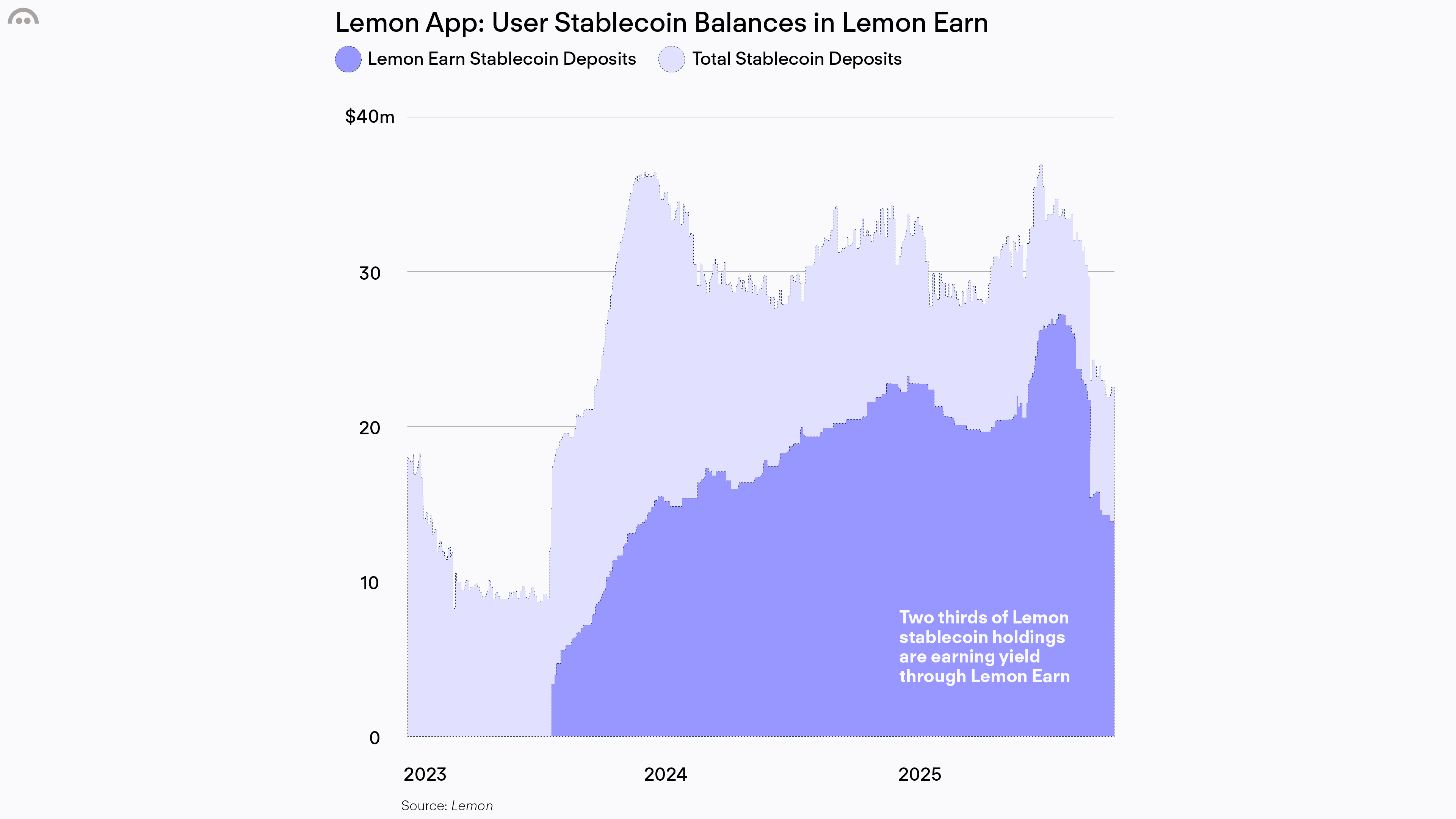
The borrower base behind these patterns is broad and growing. Fintech apps across Latin America now embed on-chain markets directly into consumer products — Argentina's Lemon, for example, routes user stablecoin balances into Aave through its Lemon Earn feature, and the majority of user stablecoin holdings on the app now earn on-chain yield.
The other side of your loan: who your interest pays
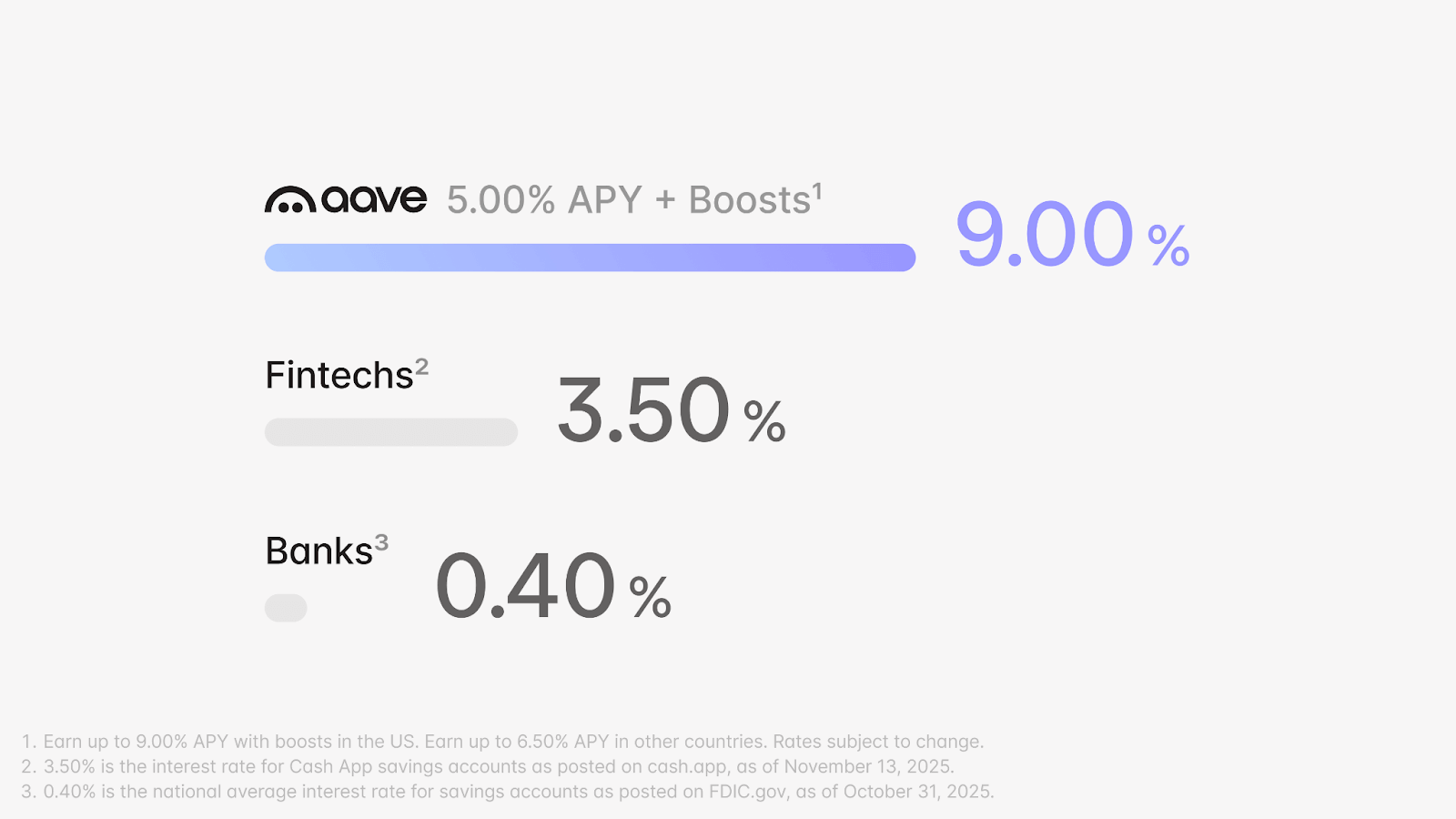
Understanding who benefits from your borrowing — and from your liquidation — makes the system easier to trust. Every dollar of interest you pay flows to depositors on the same market. That is why on-chain deposit yields can beat traditional savings products: they are funded by real borrower demand, not a marketing budget.
Liquidators occupy the same ecosystem niche. The bonus you pay in a liquidation is the fee that guarantees someone is always willing to close risky loans instantly, which is what lets the protocol keep lending through a crash without freezing withdrawals — the failure mode that took down several centralized lenders in past cycles. If you supply assets rather than borrow them, our overview of where stablecoin yield comes from walks through that side of the market.
Frequently asked questions
What happens to my collateral when I get liquidated?
A liquidator repays part of your debt and receives collateral worth that repayment plus a bonus. On older engines a liquidation typically repaid up to half your debt in one event; on Aave V4 it repays only enough to restore a target health factor. You keep whatever collateral remains, and your smaller loan stays open.
Can I lose more than my collateral in a DeFi liquidation?
No. On-chain loans are non-recourse: the protocol can only take the collateral you deposited. You cannot end up owing additional money the way you can with some margin accounts. The realistic worst case is losing a large share of your collateral to a deep liquidation during a crash.
What is a safe health factor?
There is no official safe number, but practical borrowing guides converge on staying above 2 for volatile collateral, treating 1.5 as an action line, and considering anything under 1.2 an emergency. At a health factor of 2, your collateral must lose roughly half its risk-adjusted value before liquidation.
Do liquidations give any warning?
No. The process is automated and executes within seconds of your health factor crossing 1, at any hour. Your warning system is the one you build: price alerts on your collateral asset, a weekly health-factor check, and a pre-decided response level.
Is liquidation risk a reason to use a centralized lender instead?
Centralized desks usually issue margin calls with a response window, which some borrowers value. The trade-offs are counterparty risk, typically higher rates, and discretion that can also work against you in a crisis. On-chain liquidation rules are harsher in speed but fully published in advance and identical for everyone.
Sources
- Aave — "How Aave Liquidations Perform Under Volatile Conditions" (October 10, 2025)
- Aave — "Aave V4's New Liquidation Engine" (December 11, 2025)
- Aave — "Crypto-backed Loans" (September 17, 2025)