Yield farming has a reputation problem. The phrase still makes people picture 2021-era token emissions, four-digit APYs, and pools that collapsed a month later. That version of yield farming mostly died, and it deserved to. What replaced it is quieter and far more durable: staking rewards, lending interest, curated vaults, and fee income from real trading activity. The numbers are smaller — usually 3% to 12% — but they come from places you can actually inspect.
This guide lays out the yield farming strategies that still make sense in 2026, ordered from simplest to most involved. It explains where each yield actually comes from, what breaks each strategy, and how to size positions so one bad week does not undo a year of compounding. It is written for someone farming with real savings, not play money, so risk gets equal billing with return.
Quick solution
If you just want a sane starting plan: put the majority of your yield capital in the two most boring tiers — liquid staking for your ETH and audited lending markets for your stablecoins. On current numbers that combination earns roughly 3% to 6% with the fewest moving parts. Add a curated vault layer, such as Lido's EarnETH or EarnUSD, only after you understand who the curator is and what strategies they allocate to. Treat anything advertising more than 15% as a research project, not a deposit. Keep every position in its own risk bucket, check rates monthly rather than hourly, and never farm with money you may need back within a week — exit queues and withdrawal timelines are real, as the data below shows.
Image: Lido — the EarnETH vault deposit screen, showing the vault's seven-day average APY of 7.39% and $151.7M in total value locked at the time of its March 2026 launch.
Every sustainable yield farming strategy draws on one of four income sources. Knowing which one you are holding matters more than the headline number, because each source fails in a different way.
Staking rewards. Proof-of-stake networks pay validators for securing the chain. When you hold a liquid staking token, you collect a slice of those protocol-level rewards. This is the most durable yield in crypto because it is paid by the network itself, not by a business that can go bankrupt. Our guide to liquid staking protocols covers how the major options differ.
Lending interest. Borrowers on markets like Aave post collateral and pay interest to the depositors funding their loans. Rates float with utilization: heavy borrowing demand pushes deposit APYs up, quiet markets push them down. We explain the mechanics in our piece on how DeFi lending rates are set.
Trading fees. Liquidity providers on decentralized exchanges earn a cut of every swap that routes through their pool. This income is real but comes bundled with impermanent loss, which can quietly exceed the fees you collect.
Incentive emissions. Protocols distribute their own token to attract deposits. This is the source that made 2021 yields look absurd, and it is also the least durable — emissions get cut on a schedule. Curve, for example, reduced its annual CRV emissions from 115.5 million to 97.2 million tokens in August 2026, a 15.9% cut that happens automatically every year. Any strategy built mainly on emissions has a shrinking foundation by design.
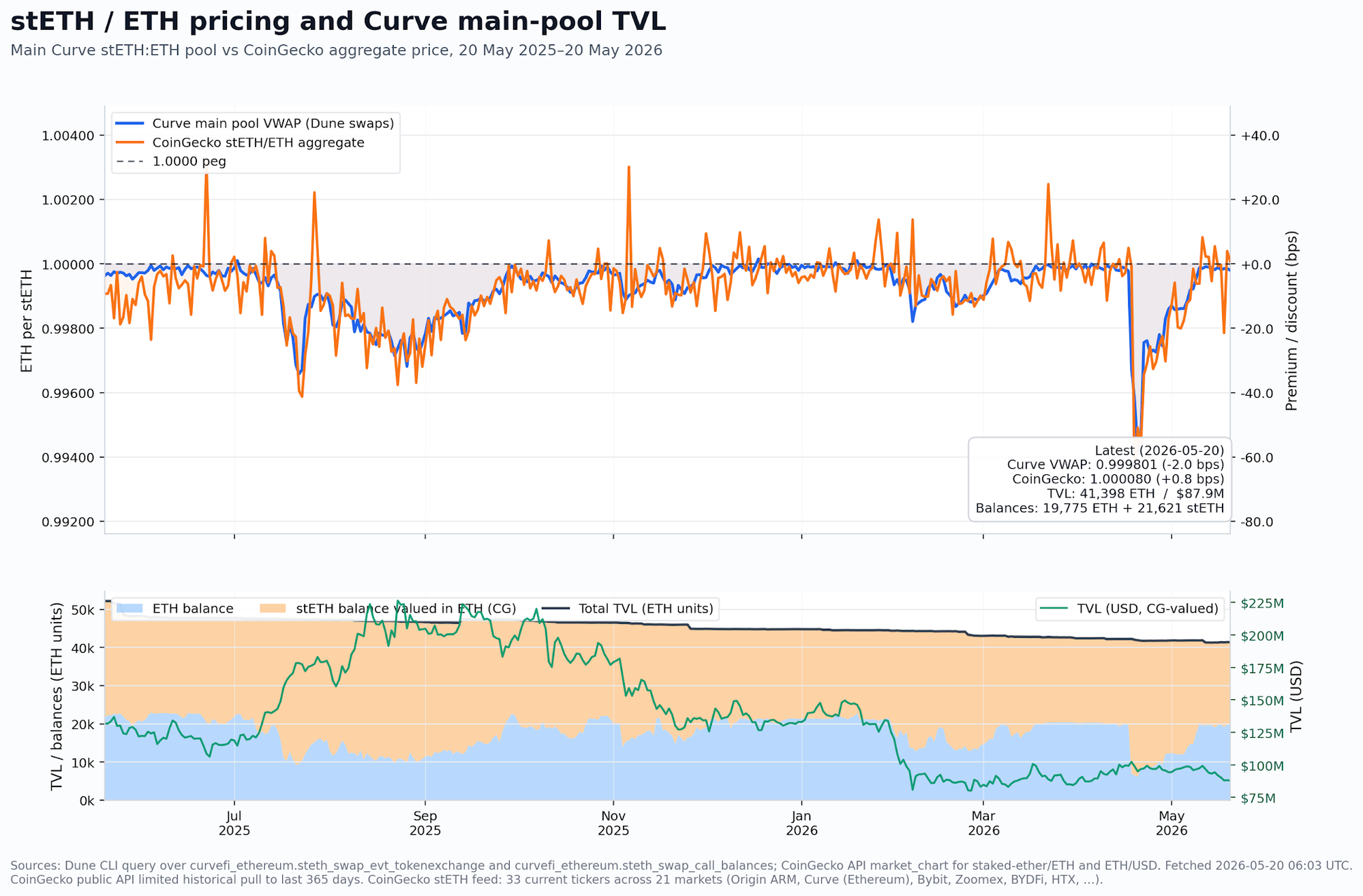
For ETH holders, liquid staking is the natural floor of a yield plan. You deposit ETH, receive a liquid token like stETH that accrues staking rewards, and stay free to use that token elsewhere in DeFi. Yields have settled in the 2.5% to 4% range — modest, but backed by protocol-level economics rather than any single company's solvency.
The strategic value is composability. A liquid staking token can sit in a lending market as collateral, anchor a stablecoin borrow, or feed a vault strategy, stacking a second yield on top of the staking base. That stacking is the legitimate descendant of old-school yield farming: each layer is inspectable, and each layer's risk is priced.
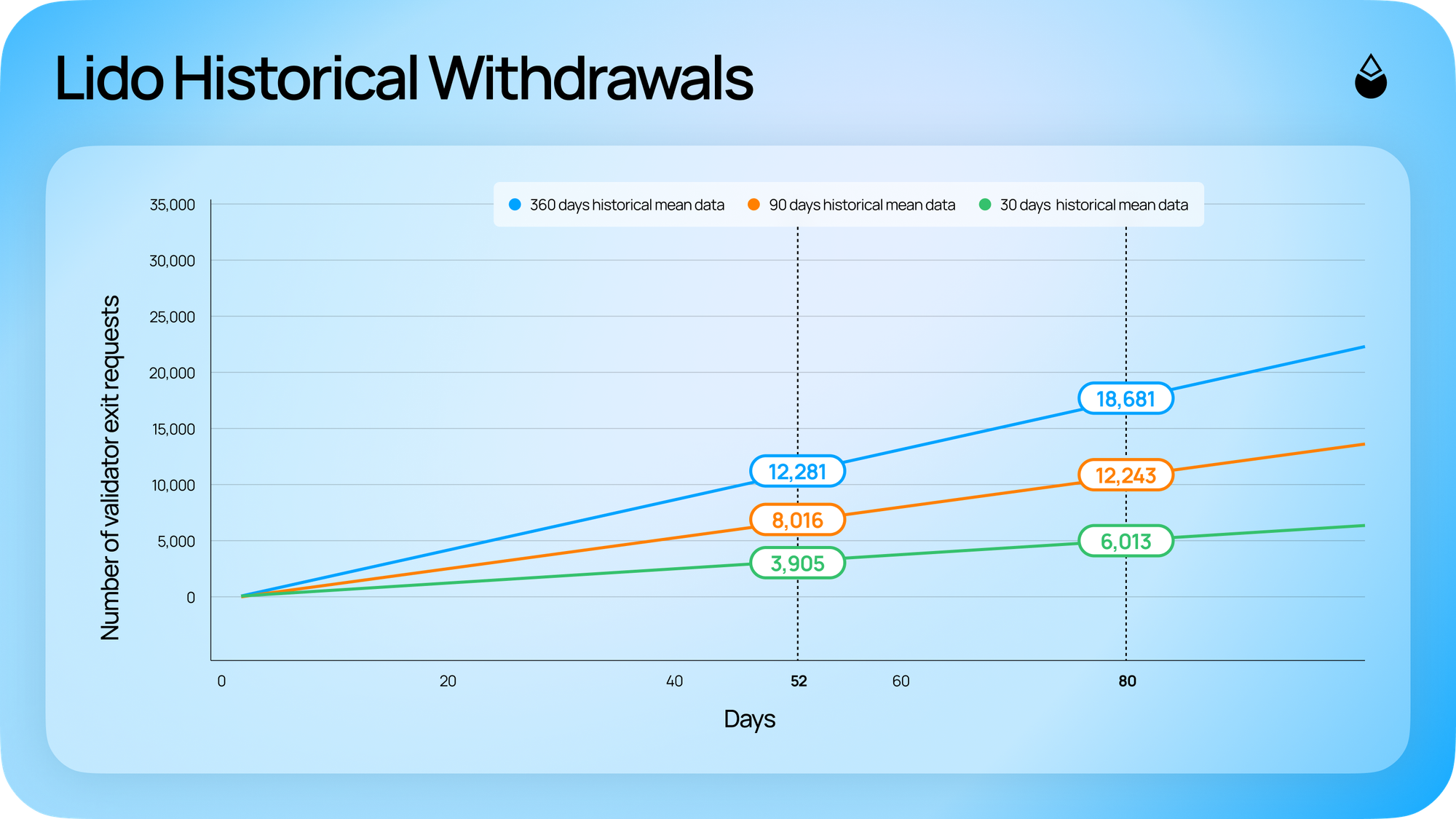
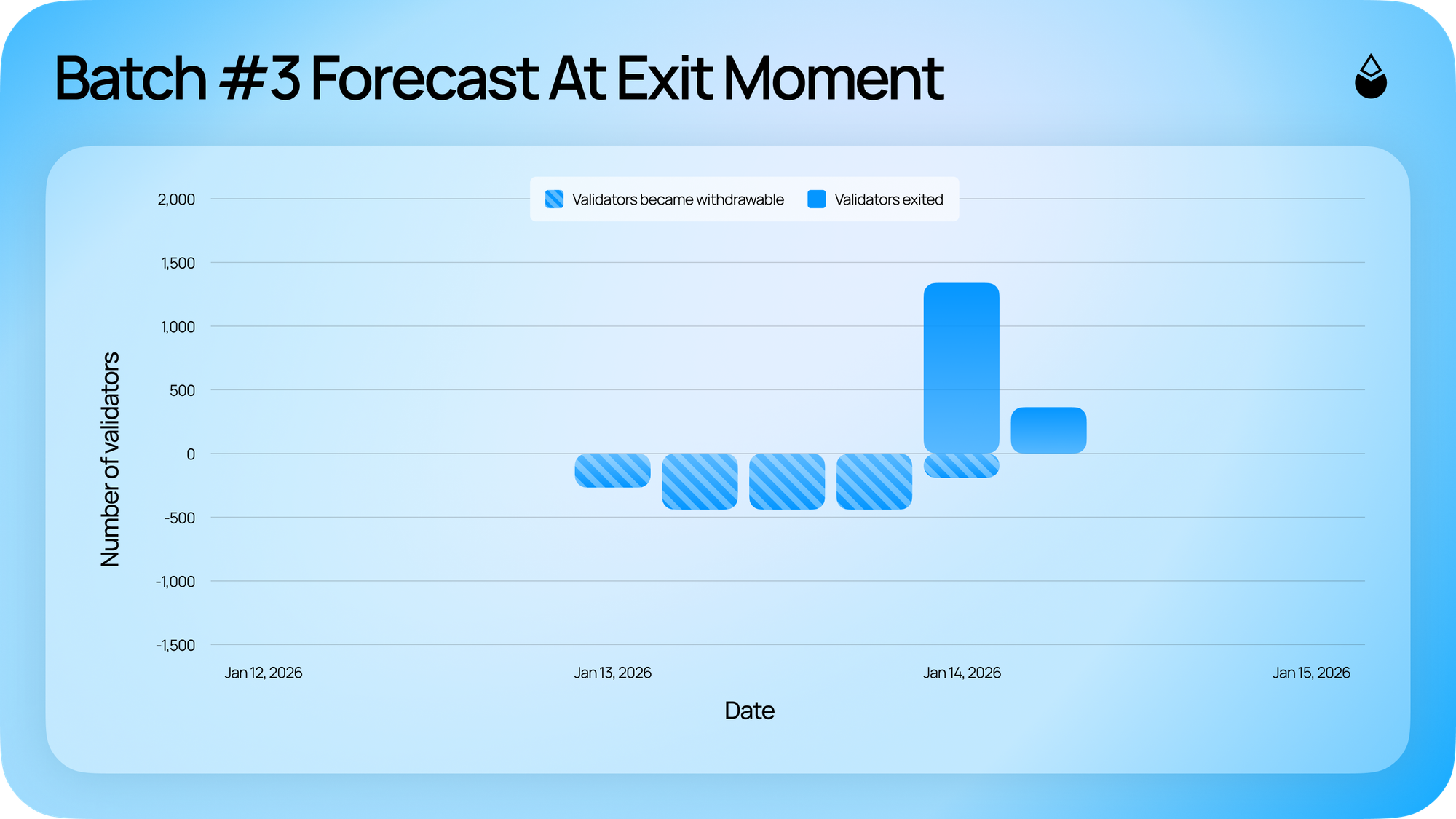
What most farming guides skip is the exit side. Unstaking is not instant. When Lido contributors needed to wind down the A41 node operator's roughly 7,000 validators in late 2025, their analysis of historical withdrawal data showed that an organic exit of that validator set would take approximately 80 days against a 52-day deadline, forcing a coordinated batch-exit design instead. Withdrawal queues are usually short for individual depositors, but under stress they stretch. If part of your plan depends on converting staked assets back to spot quickly, hold a liquidity buffer outside the staking layer.
Tier two: lending markets for stablecoin yield
Stablecoin deposits on major lending markets are the second pillar. On-chain stablecoin borrow rates have generally run 4% to 6% at the market level Aave documented in September 2025, against 8% to 12% at centralized lenders — and depositors capture most of what borrowers pay. The yield floats, so treat any snapshot as a midpoint, not a promise: our stablecoin yield guide walks through how those rates moved across recent cycles.
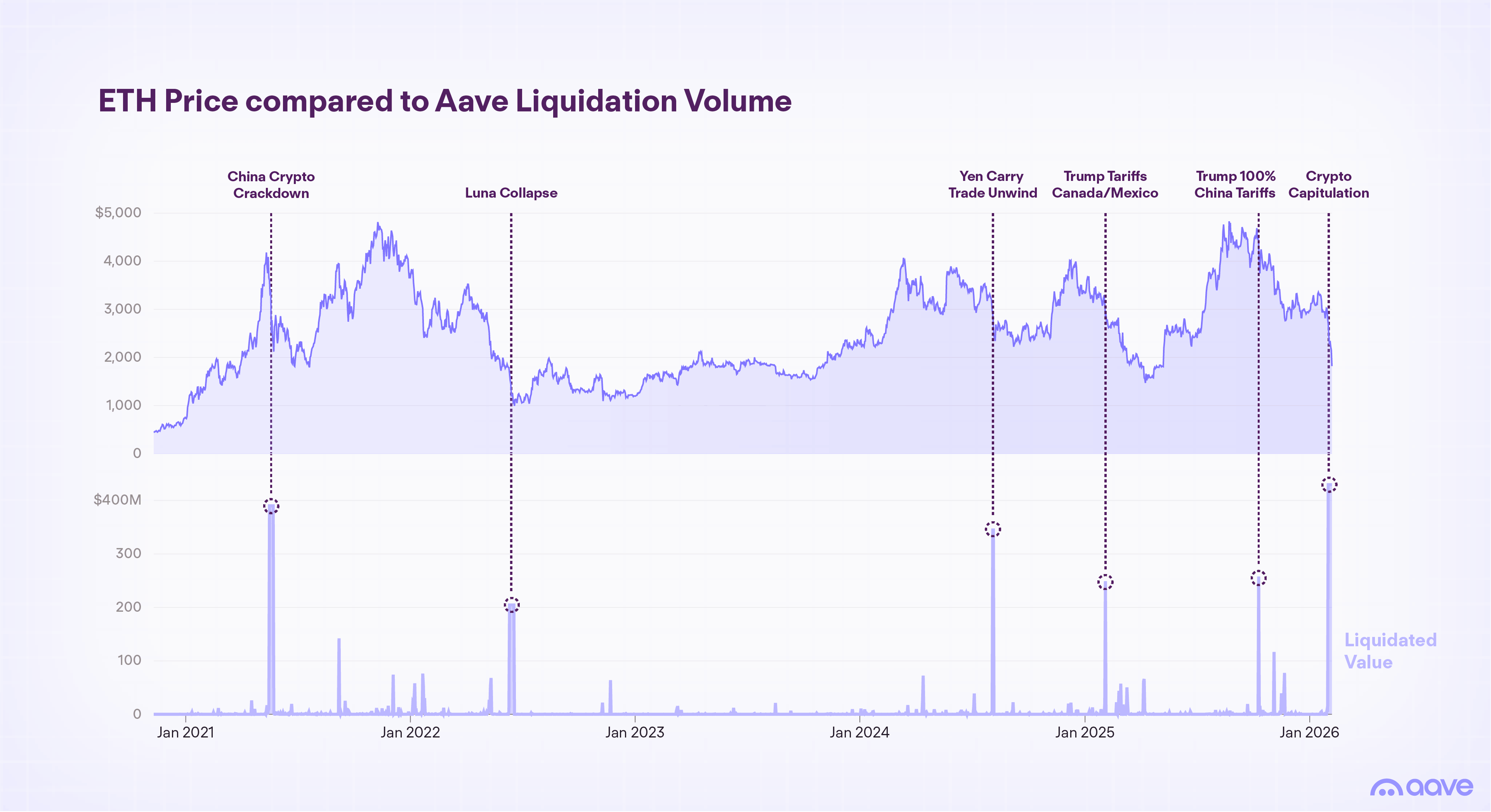
The discipline that matters here is venue selection, not rate chasing. A market paying 1% more with a thinner security record is a bad trade; lending losses arrive as total losses, not as a slightly worse APY. Stick to markets with long audit histories, deep liquidity, and conservative collateral rules, and read our overview of DeFi lending risks before sizing anything. If you are weighing on-chain venues against centralized alternatives, our DeFi versus CeFi lending comparison covers the custody trade-off in detail.
The newest generation of yield products bundles several strategies behind one deposit. Lido consolidated its Earn line into exactly two vaults in March 2026: EarnETH, which allocates ETH and stETH across protocols including Aave, Morpho, Pendle, Gearbox, and Maple, and EarnUSD, which spreads USD-denominated assets across conservative third-party lending positions and selective performing strategies. At launch the vaults showed seven-day average APYs of 7.39% and 6.93% respectively, and the earlier individual vaults they replaced had drawn more than $150 million in deposits since September 2025.
Vaults compress effort, not risk. You inherit every underlying protocol's smart-contract exposure plus a new layer: the curator's judgment. Before depositing, check three things — who curates the vault, whether allocations are reported transparently on-chain, and how withdrawals work under stress. A vault with a 24-hour withdrawal delay is fine for patient capital and wrong for your emergency buffer.

More in Staking & Yield
Comparing the main strategies side by side
The table below compiles the strategy tiers covered in this guide, drawing on the Aave rate data from September 2025, Lido's March 2026 vault launch figures, and Curve's August 2026 emission schedule. Ranges reflect where each strategy has actually traded across the recent cycle rather than best-case snapshots, and the risk column names the failure mode most likely to actually hurt you, not every theoretical one.
| Strategy | Typical yield range | Main risk | Effort | Liquidity |
|---|---|---|---|---|
| Liquid staking (ETH) | 2.5% – 4% | Token depeg during stress; exit queues | Low | High, small haircut possible |
| Stablecoin lending | 3% – 6% | Smart-contract failure; rate compression | Low | High in normal markets |
| Curated vaults (EarnETH / EarnUSD type) | 5% – 8% | Curator misallocation; stacked protocol risk | Low-medium | Withdrawal delays up to 24h+ |
| DEX liquidity providing | 2% – 15% | Impermanent loss exceeding fees | Medium-high | High, but exit price varies |
| Emission-driven farming | Highly variable | Scheduled emission cuts; token price decay | High | Depends on token depth |
Two readings of this table matter. First, the gap between tiers is smaller than it looks once you subtract losses: an LP position quoting 12% that suffers 7% impermanent loss underperforms a boring 5% lending deposit. Second, effort scales badly — emission farming demands weekly attention, while the first three tiers survive a monthly check-in.
Strategy selection is half the job; sizing is the other half. A structure that has served conservative farmers well is 50/30/20 — half in the base tiers of staking and blue-chip lending, 30% in curated vaults, and at most 20% in higher-effort positions like concentrated LP ranges. Rebalance quarterly, and rebalance by moving profits down the risk ladder, not up.
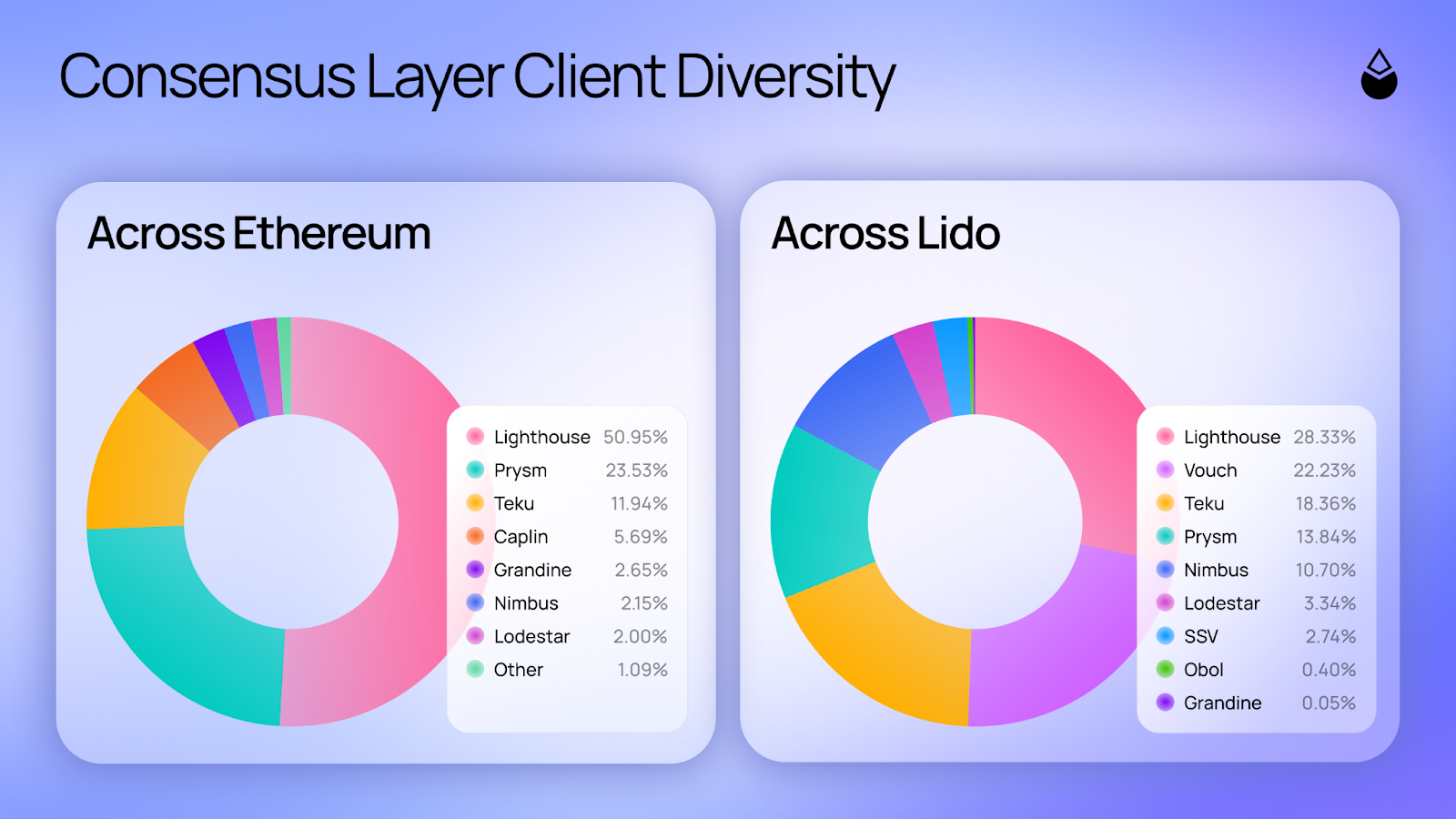
Beyond sizing, look at the infrastructure your yield depends on. Staking yield rides on validator operations, and concentration there is measurable. Lido's Q4 2025 operator metrics show its curated module spreading stake across dozens of independent operators, with consensus-client diversity split across Lighthouse (28.33%), Vouch (22.23%), Teku (18.36%), Prysm (13.84%), and others — a deliberate hedge against any single client bug hitting the whole validator set. Client and operator diversity is not academic: a correlated failure would hit rewards and, in a severe case, principal via slashing. Prefer staking venues that publish these numbers.

Four sizing and process mistakes account for most avoidable yield-farming losses:
- Chasing the top of the rate board. The highest APY in any category is usually pricing a risk you have not identified yet. Sort by security record first, rate second.
- Farming with near-term money. Exit queues, withdrawal delays, and thin exit liquidity all surface exactly when you need cash. Money you may need within a month belongs in nothing slower than a major lending market.
- Ignoring emission schedules. If your yield is mostly a protocol's own token, scheduled cuts — like Curve's automatic 15.9% annual reduction — shrink it on a timetable you can read in advance. Model the post-cut rate before depositing.
- Letting one venue absorb your whole stack. Stacking staking, lending, and vault positions that all resolve to the same underlying protocol turns diversification into an illusion. Map your true exposure per protocol, not per position.
Timing exits: the part everyone plans last
Every strategy in this guide is easy to enter and merely fine to exit — until the market is stressed, when exits become the whole game. The Lido A41 case study is a useful public window into what orderly exit management looks like at scale: contributors modeled exit windows against the validator sweep cycle, batched voluntary exits with safety gaps of roughly 6 to 24 hours between request and withdrawal eligibility, and sequenced batches so rewards were not stranded waiting to be skimmed. Poorly timed exits, their analysis notes, meaningfully extend how long capital sits idle.
Retail farmers cannot batch validator exits, but the lesson transfers directly: decide your exit plan when you enter. Know the withdrawal delay on every vault you hold, know whether your liquid staking token trades near par, and know which position you would unwind first in a drawdown. Farmers who pre-commit an unwind order avoid the classic stress mistake of selling the most liquid asset at the worst price while the illiquid ones stay stuck.
"We are a two-person startup treasury holding about $400,000 in USDC, and we cannot afford to lose principal but hate earning zero." Stay in tier two. Major-market stablecoin lending at 3% to 6% with a security-first venue list is the right ceiling; a conservative USD vault like an EarnUSD-type product is a reasonable minority allocation once you have verified the curator and withdrawal terms. Skip LP positions entirely — impermanent loss is a trade your mandate does not permit.
"We are a long-term ETH household — we hold 40 ETH we will not touch for five years and want it working." Liquid staking is your base, and your time horizon lets you add the vault tier: an EarnETH-style product stacks protocol lending yield on top of staking rewards at the cost of a withdrawal delay you will never feel. Keep 10% liquid for opportunities, and check operator and client-diversity metrics annually rather than obsessing over weekly APY.
"We are a small fund that actively manages positions and can tolerate drawdowns for higher returns." You are the only profile that should touch tiers four and five. Concentrated LP ranges and emission farming can clear 10% net, but only with weekly rebalancing, per-pool impermanent-loss tracking, and hard rules about emission-token sell discipline. Cap the sleeve at 20% and benchmark it honestly against what tier two would have paid you for zero hours of work.
Frequently asked questions
Is yield farming still profitable in 2026?
Yes, but the profitable version looks different from the 2021 version. Sustainable strategies — staking, lending, curated vaults — earn roughly 3% to 8% on major assets, with active LP strategies sometimes clearing more for skilled operators. The triple-digit APYs of the emission era are gone because the emissions funding them were cut on schedule, as Curve's automatic annual reductions illustrate. Farmers who treat mid-single-digit yields as the honest baseline do well; farmers hunting 2021 numbers mostly donate capital to those who understand the risks better.
How much money do I need to start yield farming?
On Ethereum mainnet, gas costs make positions under roughly $1,000 inefficient — entry, exit, and claim transactions eat too much of the yield. Layer-2 networks and low-fee chains push the practical floor down to a few hundred dollars. More important than the starting amount is the split: even a small stack should follow the same base-tier-first structure, because a $2,000 farmer suffers the same percentage loss from a bad venue as a $2 million one.
What is the safest yield farming strategy?
Liquid staking of ETH through a major, transparent protocol is generally the most durable yield in DeFi, because rewards come from the network itself rather than from any company's business model. Stablecoin lending on long-audited major markets is the closest second. Safest never means safe: staking carries depeg and slashing-related risks, and lending carries smart-contract risk. The honest framing is that these two tiers have the fewest failure modes and the longest track records, which is why this guide treats them as the foundation everything else sits on.
How are yield farming returns taxed?
In most jurisdictions, yield received — whether staking rewards, lending interest, or emission tokens — is taxable as income at the value when received, and later price changes are capital gains or losses. Vault structures that auto-compound can complicate the timing of recognition. Rules differ sharply by country and change often, so keep per-transaction records from day one and have a crypto-literate tax professional review your structure before the sums get large. Nothing in this article is tax advice.
Can I lose money yield farming even if the protocol is never hacked?
Yes, in at least three ways. Impermanent loss can make an LP position underperform simply holding the assets, even while fees accrue. Emission-token yields can decay faster than you harvest them when the token price falls or scheduled cuts arrive. And liquidity crunches can force you to exit a position at a discount — a liquid staking token trading below par, or a vault withdrawal delay landing exactly when you need cash. Most real-world farming losses come from these mechanics, not from headline hacks.
Sources
- Lido, "Lido Earn Expands with EarnETH and EarnUSD" — March 12, 2026
- Lido, "Exiting 7k Validators: A Case Study in Optimizing Ethereum Validator Exits" — April 30, 2026
- Curve Finance, "CRV Emissions Drop Again: What Epoch 6 Means" — August 13, 2026