If you hold crypto and want to earn yield on it or borrow against it, you face one fork in the road before any other decision matters: do you use a centralized company (CeFi) or a decentralized protocol (DeFi)? The two paths can look identical in an app. Both show you an interest rate. Both let you deposit a stablecoin or post collateral in a few taps. Underneath, they are built on completely different foundations, and those foundations decide who holds your money, what happens in a crisis, and what you actually earn after the marketing rate.
This guide compares the two models the way a borrower or depositor experiences them, not the way a whitepaper describes them. We compiled current scale, rate, and adoption data from Aave Labs research, Chainalysis regional data, Morpho's Robinhood integration dashboards, and Curve's on-chain emission schedule, and we walk through where each model genuinely wins. The short version: the border between the two is dissolving, because the biggest CeFi brands now run DeFi protocols under the hood.
Quick solution
Use DeFi lending when you want transparency, self-custody, and market-set rates: deposit or borrow through a large, long-lived protocol (Aave, Morpho, or a similar blue chip), keep your own keys, and verify collateral on-chain at any time. On-chain stablecoin borrow costs averaged 4-6% over the twelve months before Aave Labs' September 2025 research, versus roughly 8-12% at centralized crypto lenders and 10-15%+ for personal loans. Use CeFi lending when you need fiat rails, customer support, tax paperwork, or a regulated counterparty your accountant will accept — and treat the company itself as your main risk, because your assets sit on its balance sheet. If you want both at once, use a CeFi front end that routes to a DeFi protocol underneath (the Robinhood-Morpho model): you keep the simple interface while an auditable protocol holds the loan logic. Whatever you choose, never lend more than you can afford to lock up, and read our companion guide on DeFi lending risks before sizing a position.
CeFi lending is a company. You send your crypto to a business such as an exchange or a broker, it takes custody, and it lends from its balance sheet. Your claim is an IOU against that company. If it manages risk well, you get your interest. If it does not, you stand in a bankruptcy line. That is not a hypothetical: Celsius, BlockFi, and Voyager all froze withdrawals and filed for bankruptcy in 2022, and their depositors learned that "earn" accounts were unsecured loans to a private company.
DeFi lending is a program. Protocols like Aave and Morpho are smart contracts on public blockchains. Depositors put assets into a shared market, borrowers post collateral worth more than they borrow, and interest rates move automatically with supply and demand. Nobody takes custody of the pool in the corporate sense; the code enforces collateral rules identically for everyone, around the clock. During the same 2022 stress that bankrupted the CeFi lenders, the major DeFi protocols kept processing deposits, withdrawals, and liquidations exactly as written.
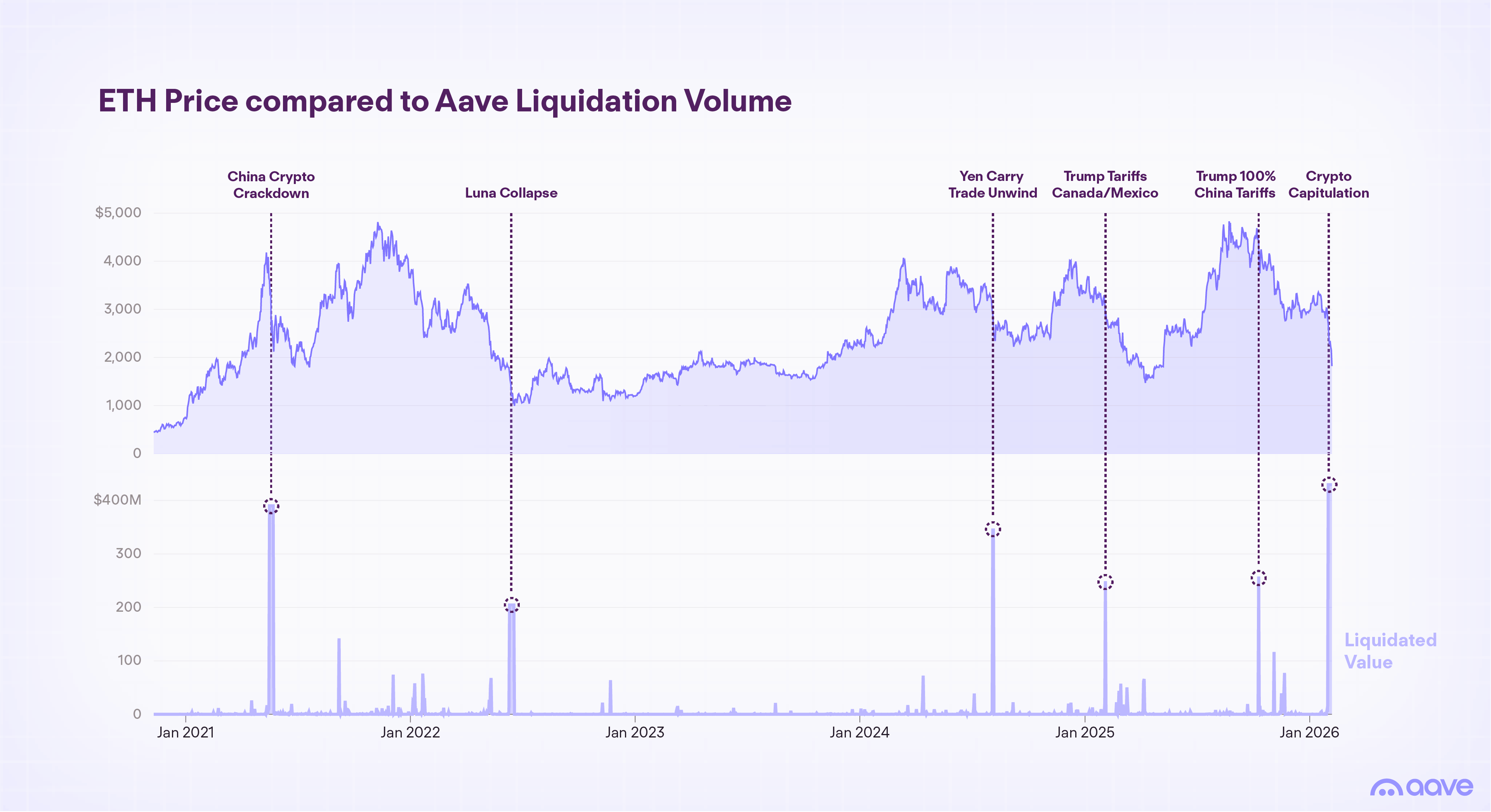
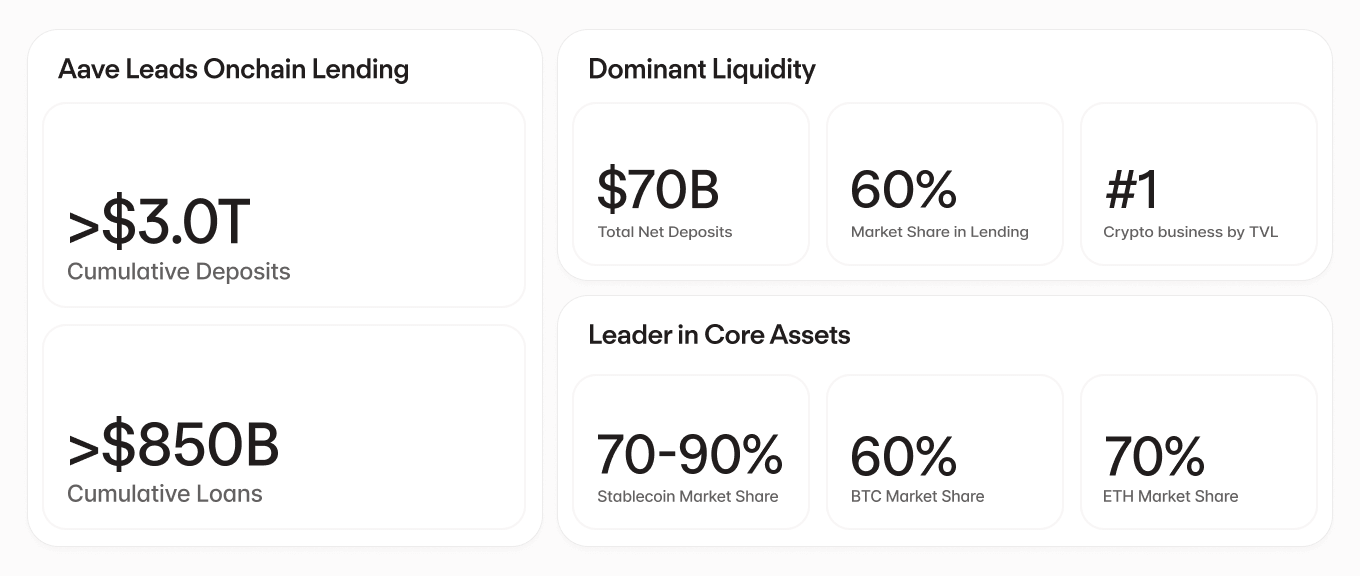
The scale gap that once favored CeFi has closed. Aave alone reported more than $3.0 trillion in cumulative deposits and $850 billion in cumulative loans processed, with about $70 billion in net deposits and roughly 60% of the DeFi lending market. Its liquidation machinery — the part that protects depositors — has processed more than $3 billion across 250,000+ liquidation events with minimal protocol-level losses. No centralized crypto lender publishes numbers like these, because no centralized lender has to.
Where borrowers actually are: the CeFi habit
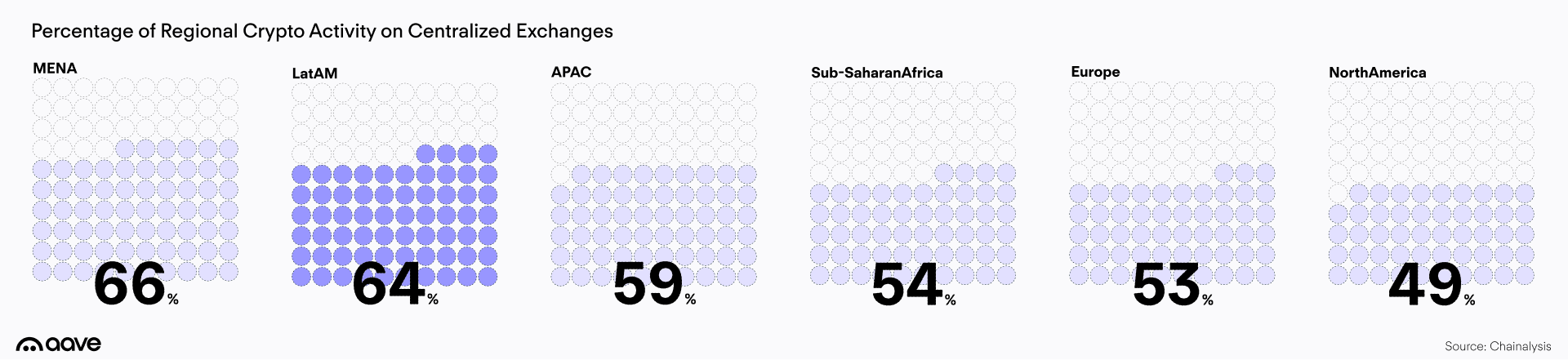
For all of DeFi's structural advantages, most people still reach for a centralized platform first. Chainalysis data compiled in Aave's December 2025 Latin America research shows how strong that habit is: centralized exchanges account for 66% of regional crypto activity in the Middle East and North Africa, 64% in Latin America, 59% in Asia-Pacific, 54% in Sub-Saharan Africa, 53% in Europe, and 49% in North America. In every region except North America, a majority of crypto activity flows through a centralized company.
Why does this matter for a lending decision? Because it explains what CeFi is actually good at. People use centralized platforms for fiat on-ramps, familiar interfaces, password recovery, and customer support. Latin America's crypto transfer volumes grew 63% year over year in 2025 per Chainalysis, yet DeFi adoption lagged the region's overall crypto usage — users held stablecoins on centralized apps and left yield on the table. The fintechs that closed that gap did it by embedding DeFi invisibly: Argentina's Lemon routes its Earn program to Aave for more than 130,000 opted-in users (up 73% year over year) on roughly $40 million of deposits, and Ripio offers Aave yield to its 4 million app users. The users never touch a wallet; the protocol does the lending.
More in Lending & Borrowing
DeFi and CeFi lending side by side
The table below compiles the practical differences from the sources above into one view. It reflects how each model behaves for a typical depositor or borrower in 2026, not how either side advertises itself.
| Dimension | DeFi lending (Aave, Morpho, Curve Llamalend) | CeFi lending (exchange or broker programs) |
|---|---|---|
| Who holds your assets | Smart contract; you keep your keys until you deposit, and the pool is on-chain | The company; assets sit on its balance sheet |
| Transparency | Every loan, rate, and collateral ratio visible on-chain in real time | Periodic disclosures at best; often none |
| Typical stablecoin borrow cost | About 4-6% average over the 12 months to Sep 2025 | About 8-12% for comparable crypto-backed products |
| What sets the rate | Utilization: supply and demand inside the pool | Company policy and its own funding costs |
| Failure mode | Smart contract bug or bad collateral listing; losses are scoped to the market | Company insolvency; depositors become unsecured creditors |
| Access | Permissionless, 24/7/365, no credit check | Account approval, jurisdiction limits, possible freezes |
| Support and recovery | None; a mistaken transaction is final | Customer service, password resets, sometimes insurance |
| Fiat and taxes | You handle on/off ramps and records yourself | Built-in fiat rails and yearly tax forms |
| Track record under stress | Major protocols kept operating through 2022 | Celsius, BlockFi, and Voyager froze and went bankrupt in 2022 |
Neither column wins every row, and that is the honest takeaway. DeFi wins on price, transparency, and survivability of the system itself. CeFi wins on convenience, recovery, and everything that touches a bank account.
The advertised number is where most comparisons stop, and it is exactly where you should keep going. On the borrowing side, the gap is clean: automating credit with smart contracts removes intermediaries, which is why on-chain stablecoin borrowing averaged 4-6% while centralized crypto-backed loans ran roughly 8-12%. If you plan to borrow against crypto rather than sell it, that spread compounds meaningfully over a multi-year hold.
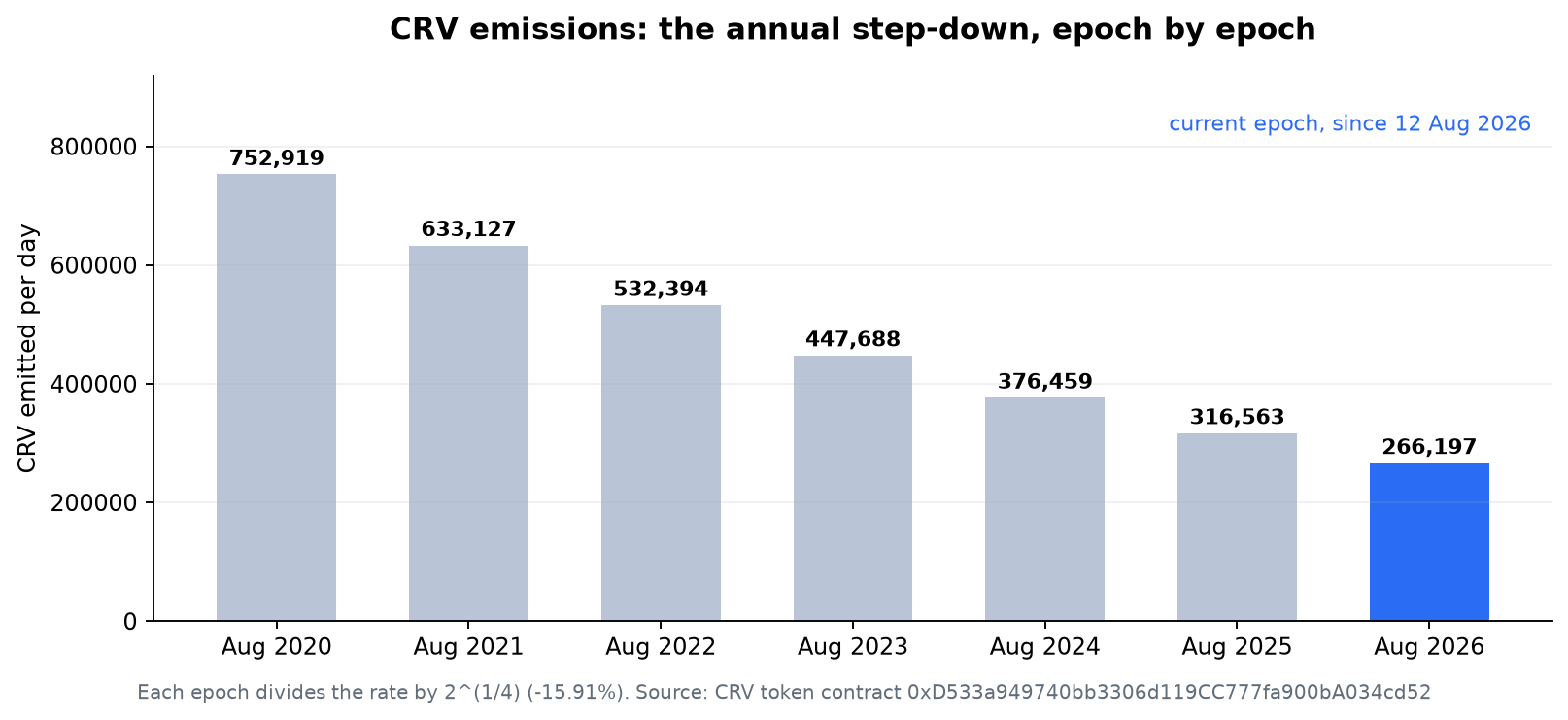
On the earning side, you need to ask where the yield comes from. Real lending yield is paid by borrowers and moves with demand. Incentive yield is paid in a protocol's own token, and it is designed to shrink. Curve is the clearest public example because its schedule is hardcoded: CRV emissions step down about 15.9% every August, and the August 2026 cut took annual issuance below 100 million CRV for the first time — from about 115.5 million to 97.2 million CRV per year, or 266,197 CRV per day, versus 752,919 per day at launch in 2020.
The lesson generalizes to both camps. A DeFi pool advertising a rate far above borrowing demand is paying you in emissions that decay on a schedule. A CeFi program advertising a rate far above what the company can earn deploying your assets is paying you from somewhere worse — that was the Celsius model. Sustainable yield in either system traces back to a real borrower paying real interest. Our stablecoin yield guide shows how to decompose an advertised rate into its organic and incentive parts before you deposit.
The border is dissolving: CeFi front ends on DeFi rails
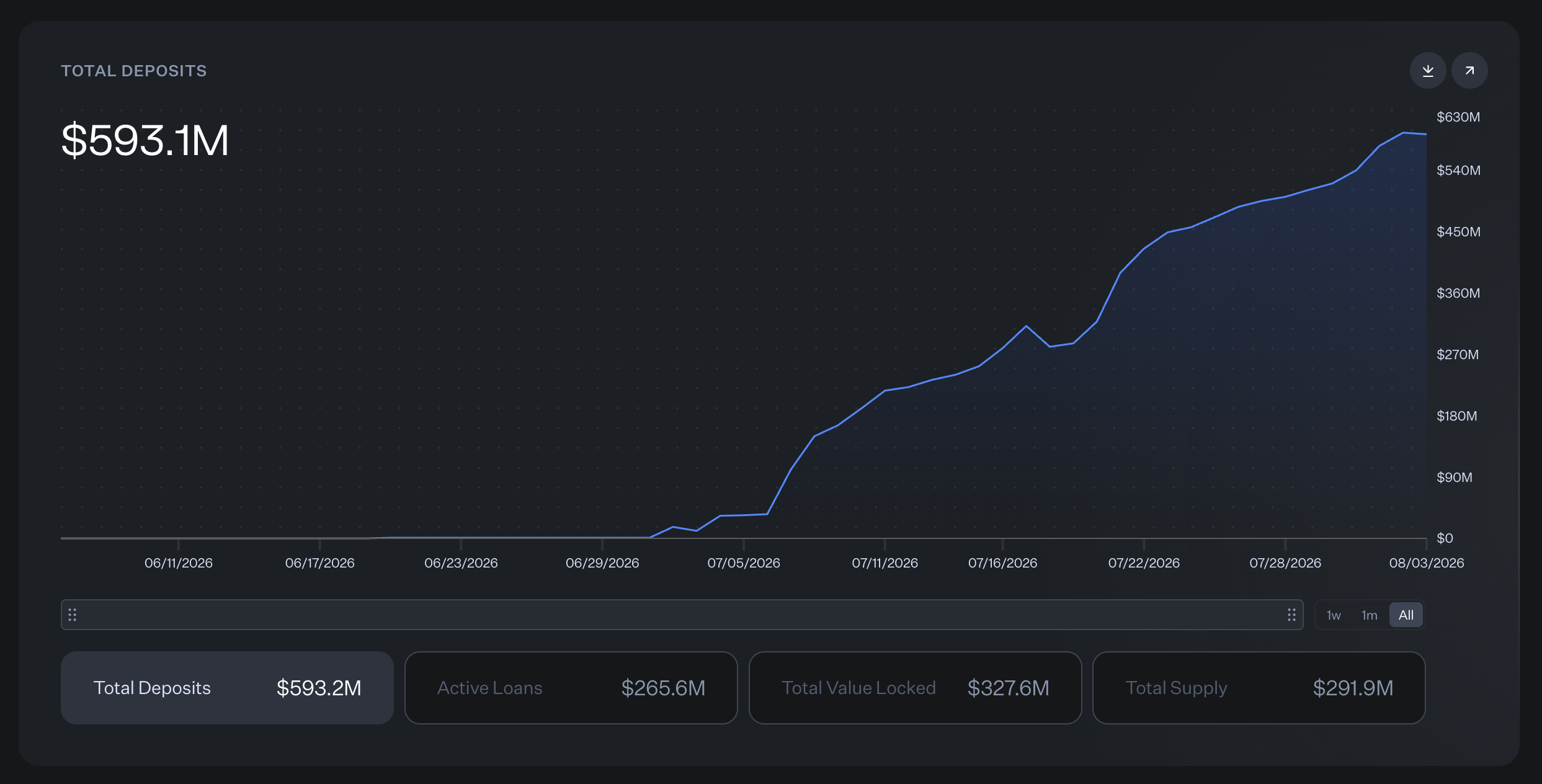
The most important 2026 development in this debate is that the biggest CeFi brands stopped competing with DeFi and started running on it. In July 2026, Robinhood chose Morpho to power its crypto lending product, putting a regulated, publicly listed broker's interface on top of a DeFi protocol's markets. The result is visible on-chain: total deposits through the Robinhood Chain Morpho deployment reached $593.1 million by early August 2026, with $265.6 million in active loans — growth that took roughly eight weeks from launch.
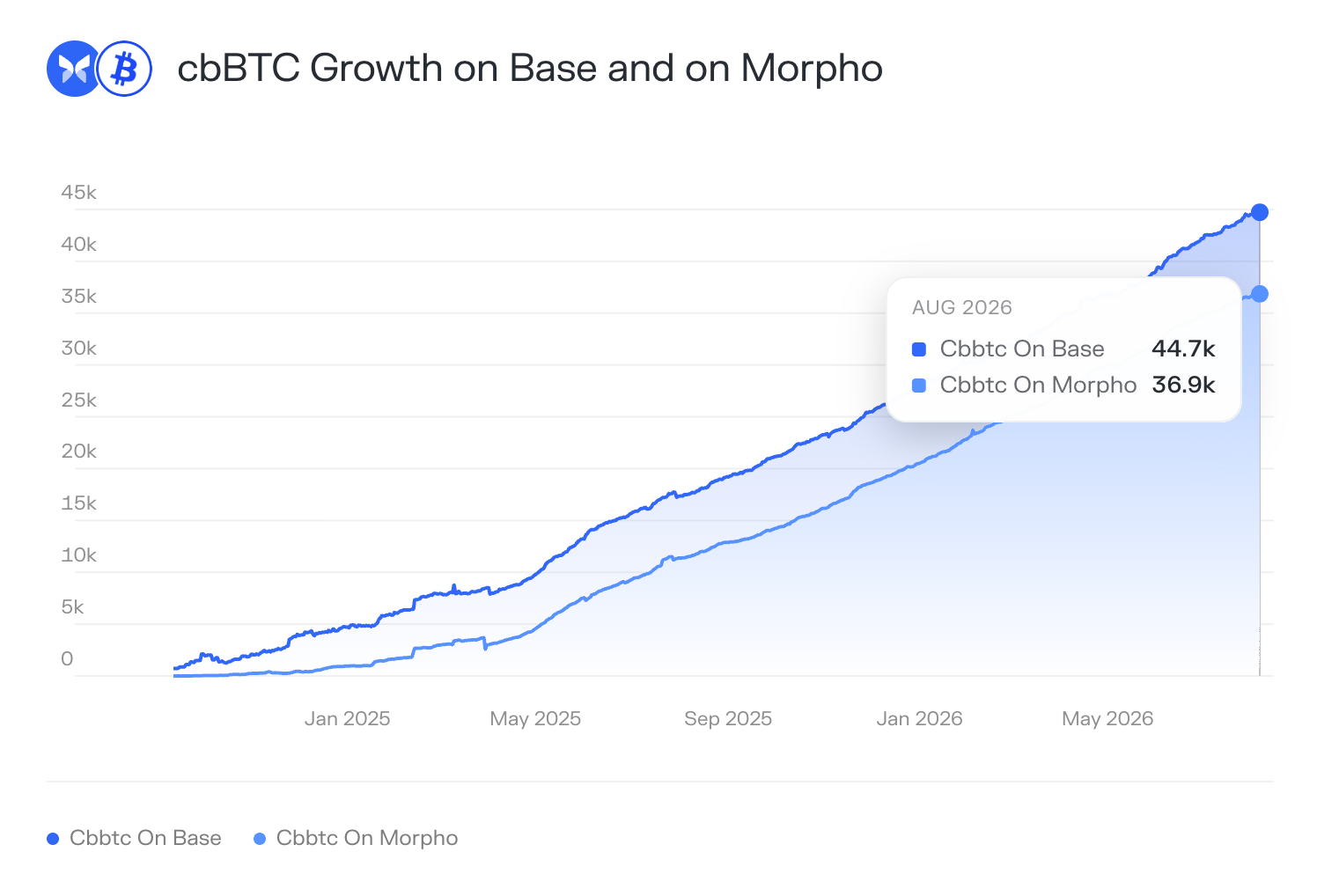
Coinbase runs the same play with assets instead of interfaces. Its wrapped bitcoin, cbBTC, is a CeFi-custodied asset built to travel through DeFi: by August 2026 about 44,700 cbBTC circulated on Base, with 36,900 of it deposited into Morpho markets — meaning the overwhelming majority of a Coinbase product's supply lives inside a DeFi lending protocol.
For you as a user, this hybrid model is a genuine third option. You get CeFi's interface, support, and fiat rails, while the loans themselves live in auditable, overcollateralized on-chain markets rather than on a company's private books. It is not a free lunch — you are still trusting the front end's custody of your account — but the lending layer itself becomes inspectable in a way pure CeFi never was. When you evaluate any platform in this category, check which protocol actually holds the market; our DeFi lending platforms comparison covers the major ones.
Institutions were supposed to be CeFi's permanent advantage: regulated entities would never touch open protocols. The deposit data says otherwise. Tokenized real-world asset and institutional vaults on Morpho grew from roughly zero in April 2025 to about $1.4 billion in historical deposits by August 2026, spanning vaults connected to names like Maple's syrupUSDC and tokenized gold. The same September 2025 Aave research noted the backdrop: a $4 trillion total crypto market, more than $70 billion of ETF inflows, and over 50 million American adults holding crypto.
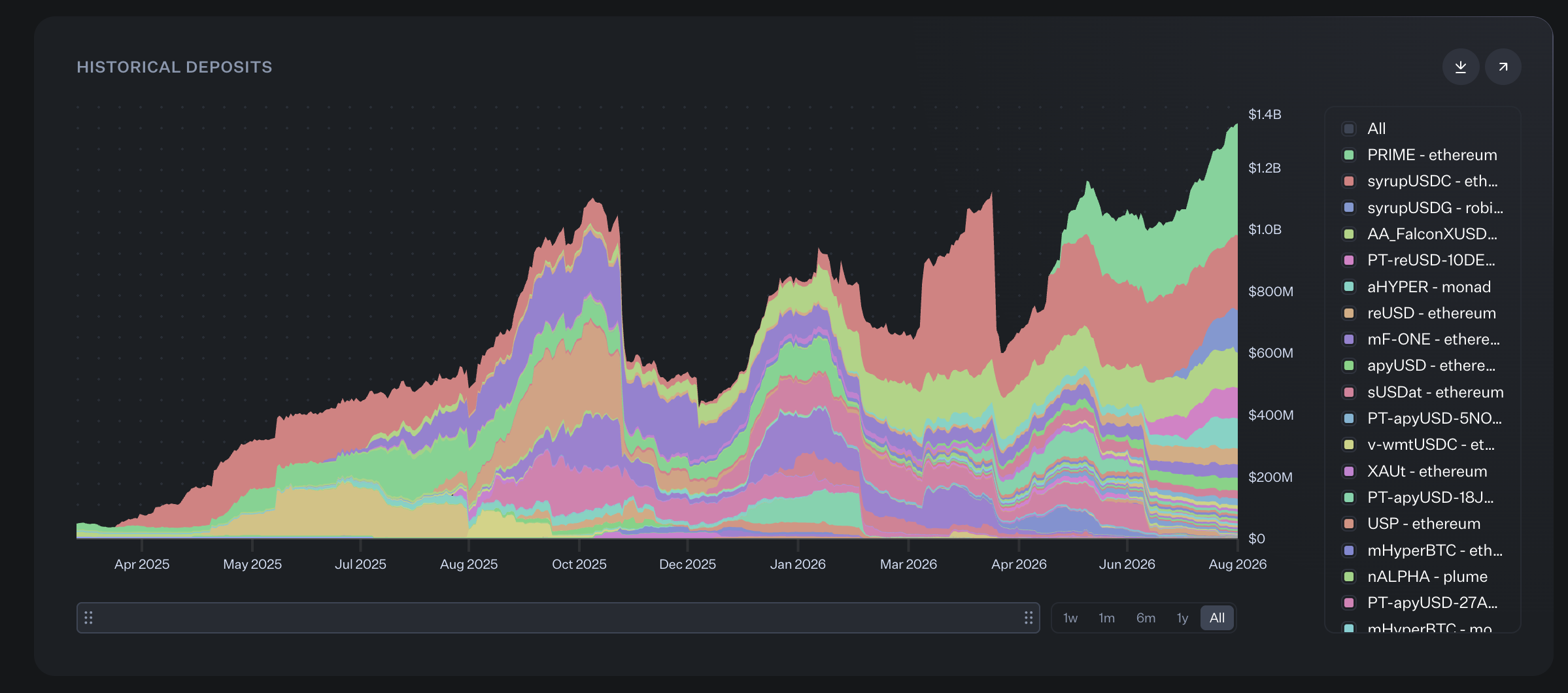
The direction of travel is consistent: money that starts in regulated wrappers increasingly ends up deployed through on-chain lending markets, because that is where the transparent collateral and competitive rates are. CeFi's durable role is shrinking toward what it does uniquely well — compliance, custody for people who want it, and fiat plumbing.
How to choose for your situation
"We are a two-person crypto treasury at a small startup. We hold USDC and want yield without becoming custodians of a complex DeFi position." Start with the hybrid lane: a regulated platform that routes to a major protocol, or a direct deposit into a large, conservative stablecoin market on Aave or Morpho. Prioritize a protocol with a long liquidation track record over the highest advertised rate, and confirm the yield is organic borrow demand rather than token emissions.
"We are a household with most of our savings in bitcoin, and we need cash for a renovation without selling and triggering taxes." A crypto-backed loan fits, and the venue decision is mostly about rates and liquidation mechanics. On-chain borrowing at 4-6% against roughly 8-12% at centralized lenders is a large spread on a six-figure loan. If you are comfortable managing a wallet and monitoring your health factor, DeFi is cheaper and more transparent; if you are not, a CeFi lender is acceptable so long as you treat its solvency as your primary risk.
"We are a fintech operating in Latin America, and our users hold stablecoins in our app but earn nothing." Follow the Lemon and Ripio playbook: keep your interface, embed a blue-chip protocol as the yield engine, and abstract the crypto away. Your users get dollar-denominated yield backed by real borrowing demand, and you get engagement and deposit stickiness without building a lending desk.
- Treating a CeFi "earn" rate as a bank deposit. It is an unsecured loan to a company. The 2022 bankruptcies of Celsius, BlockFi, and Voyager turned depositors into creditors, and that structure has not changed.
- Chasing the highest advertised APY without decomposing it. Yield paid in a protocol's own token decays on a schedule — Curve's emissions drop about 15.9% every August by design — and yield with no visible borrower demand behind it is a red flag in either system.
- Assuming the app you see is the system you are using. Robinhood's lending runs on Morpho; Lemon's Earn runs on Aave; cbBTC is a Coinbase asset living in DeFi markets. Judge the layer that actually holds the loans, not the logo on the front end.
- Ignoring your own operational limits. DeFi has no password reset and no support line. If your team cannot securely manage keys and monitor a position, a cheaper rate will not save you from an operational loss.
Frequently asked questions
Is DeFi lending safer than CeFi lending?
They fail differently. DeFi's main risks are smart contract bugs and bad collateral, scoped to specific markets and visible on-chain; the major protocols operated normally through the 2022 crash. CeFi's main risk is company insolvency, which is opaque until it happens and puts your whole balance in the bankruptcy queue. Blue-chip DeFi has the better stress-test record, but a careless user can lose funds in DeFi through their own mistakes more easily than in CeFi.
Why are DeFi borrow rates usually lower than CeFi rates?
Smart contracts replace loan officers, credit checks, and balance-sheet intermediaries, so the overhead is lower and rates are set by pool utilization rather than company margin targets. That is the mechanism behind the 4-6% on-chain stablecoin average versus roughly 8-12% at centralized lenders in Aave Labs' September 2025 data.
Can I use DeFi lending without managing a wallet?
Increasingly, yes. Platforms like Robinhood (via Morpho) and regional fintechs like Lemon and Ripio (via Aave) embed DeFi markets behind ordinary app interfaces. You gain simplicity but reintroduce a custodial front end, so you are trusting the app with access even though the lending layer is on-chain.
What happens to my CeFi deposit if the company goes bankrupt?
In the 2022 cases, withdrawals froze first and customers were treated as unsecured creditors, recovering a fraction of their balances years later. Unless your jurisdiction and platform provide explicit, segregated custody with legal protection, assume your deposit ranks behind secured creditors in a failure.
Do institutions use DeFi lending now?
Yes, and at growing scale. RWA and institutional vault deposits on Morpho reached roughly $1.4 billion by August 2026, and Coinbase's cbBTC — an institution-grade wrapped asset — holds most of its Base supply inside Morpho markets. The institutional pattern is regulated custody on the outside, on-chain lending markets on the inside.
Sources
- Aave Labs, "Crypto-backed Loans," September 17, 2025 — on-chain vs centralized vs personal loan rate ranges, Aave scale and liquidation statistics, market-size context.
- Aave Labs, "How Aave is Powering Latin America's Stablecoin Revolution," December 8, 2025 — Chainalysis regional CEX activity shares and LatAm growth, Lemon and Ripio integration figures.
- Morpho, "Robinhood chooses Morpho to power new Earn product," July 1, 2026, with Morpho's August 2026 ecosystem dashboards — Robinhood Chain deposits, cbBTC and RWA vault growth.
- Curve News, "CRV Emissions Fall Below 100 Million as Epoch 6 Begins," August 13, 2026 — CRV emission schedule and August 2026 step-down.