Most articles about DeFi lending platforms list ten names and rank them by a star rating that means nothing. That does not help you, because the real differences between these platforms are structural. Aave, Morpho, and Compound do not just have different logos and different interest rates. They organize lenders, borrowers, and risk in fundamentally different ways, and those design choices decide what happens to your deposit when markets get ugly.
This guide explains how the three major on-chain lending designs work, what the on-chain numbers say about where deposits are actually going in 2026, and how to match a platform to your situation. Every figure here comes from a dated, named source, and we tell you where the data ends and judgment begins.
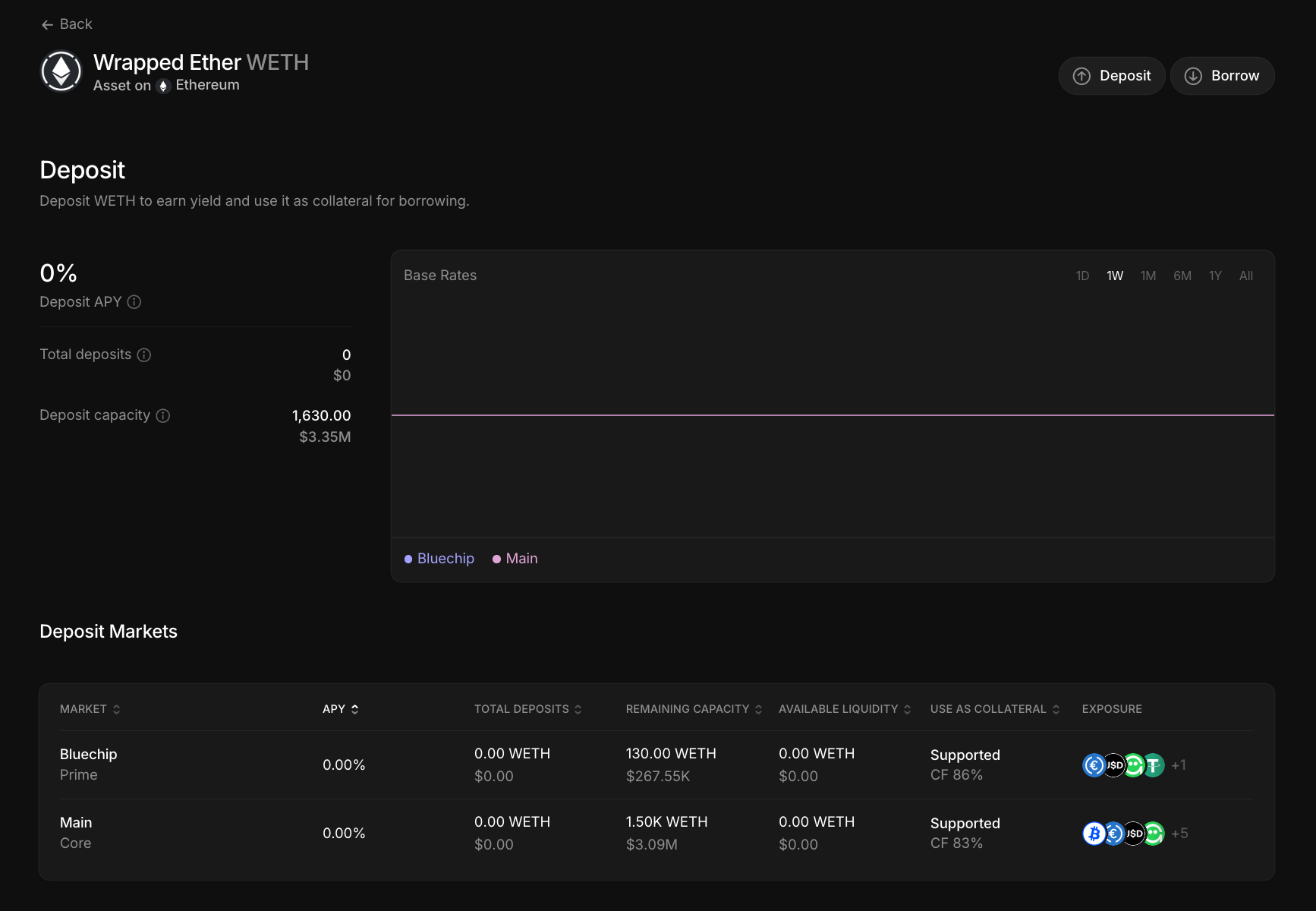
Image: Aave — the WETH asset detail page in the Aave app, showing deposit markets with an 86 percent collateral factor on Bluechip Prime and 83 percent on Main Core.
Quick solution
If you just want a defensible starting point: deposit stablecoins into Aave's main market or a large, established Morpho vault, and skip everything advertising double-digit yields. Aave gives you the deepest shared liquidity pool with the longest operating history. Morpho gives you isolated markets where one bad collateral asset cannot poison the whole pool, at the cost of having to pick a vault curator you trust. Compound pioneered the pooled model and still runs it competently at smaller scale. If you would rather not touch a wallet at all, the same Morpho infrastructure now sits behind Coinbase and Robinhood products, and using it through those apps trades some yield and control for a familiar interface.
Before depositing anything, read our guide to DeFi protocol safety, because platform choice matters less than position sizing and risk hygiene.
Understanding DeFi lending platforms means understanding three architectures, not thirty brand names.
Pooled lending is the original design. Compound introduced it in 2018 and Aave scaled it. All lenders deposit into one shared pool per asset. All borrowers draw from that same pool, posting other assets as collateral. An interest rate algorithm moves rates up when the pool runs low and down when it fills up. The strength is deep, shared liquidity: your withdrawal does not depend on one specific borrower repaying. The weakness is shared risk: every collateral asset the protocol accepts is a potential source of bad debt for every lender in the pool.
Isolated markets are Morpho's answer to that weakness. Morpho Blue, the protocol's core, consists of minimal, immutable lending markets. Each market pairs exactly one collateral asset with one loan asset, with fixed parameters set at creation. If an exotic collateral asset collapses, losses stay inside that single market. Lenders in other markets are untouched. The trade-off is that liquidity fragments across many small markets instead of concentrating in one deep pool.
Curated vaults sit on top of isolated markets and solve the fragmentation problem. A Morpho vault accepts deposits in one asset, then a named curator allocates those deposits across a set of isolated markets according to a published mandate. Depositors get pooled-style convenience; the curator handles market selection and risk limits. This is also the layer where the platform question quietly becomes a people question, because you are now trusting a curator's judgment, not just a smart contract.
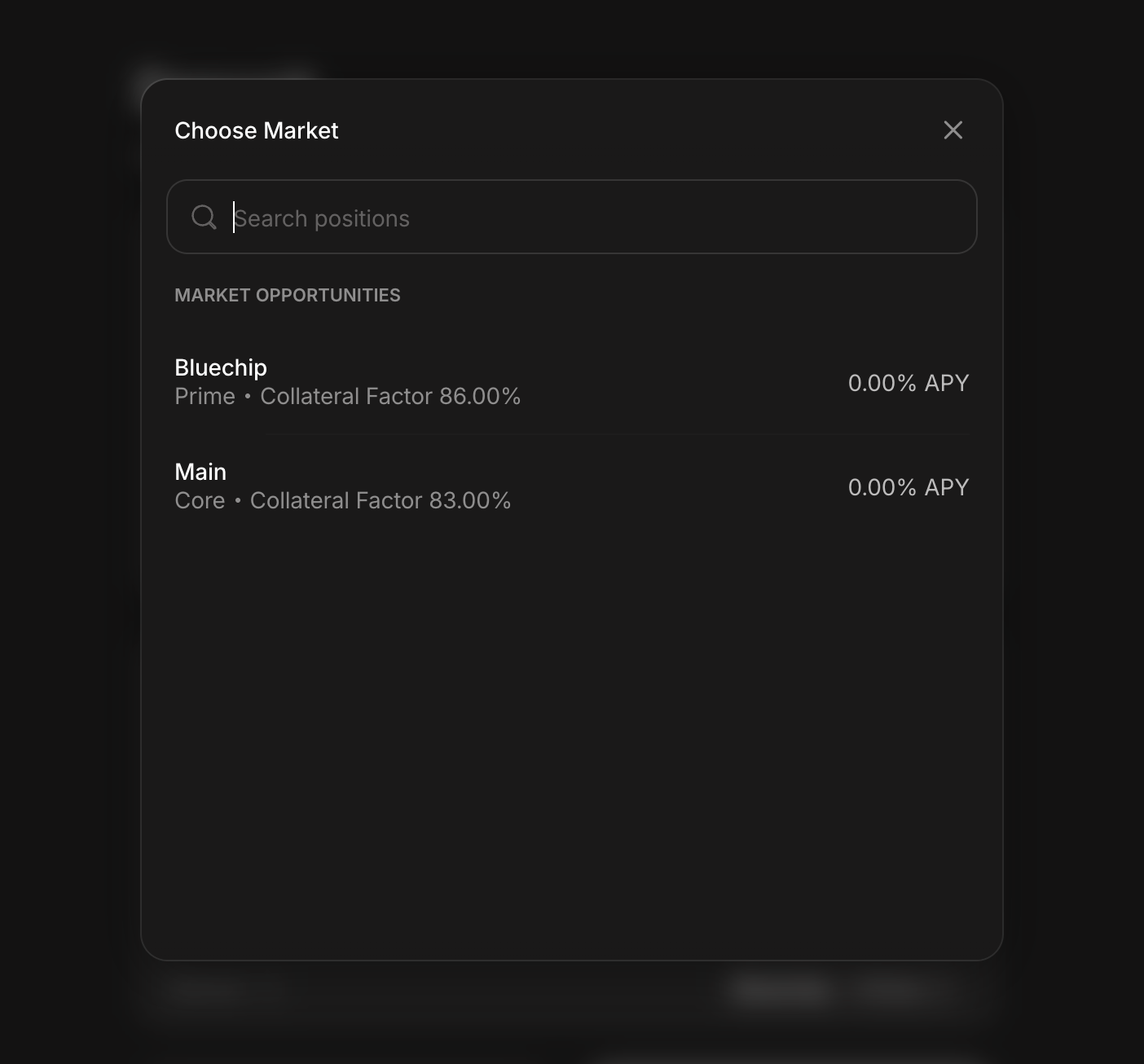
Aave has moved toward configurable market separation as well. Its current app exposes multiple markets with different collateral factors — the screenshot above shows WETH accepted at an 86 percent collateral factor in the conservative Bluechip Prime market and 83 percent in the broader Main Core market. Different markets, different risk menus, one brand.
What the deposit data says in 2026
Marketing pages all claim momentum. On-chain deposit numbers are harder to fake, and the clearest public dataset this year comes from the Base network, where lending activity has concentrated.
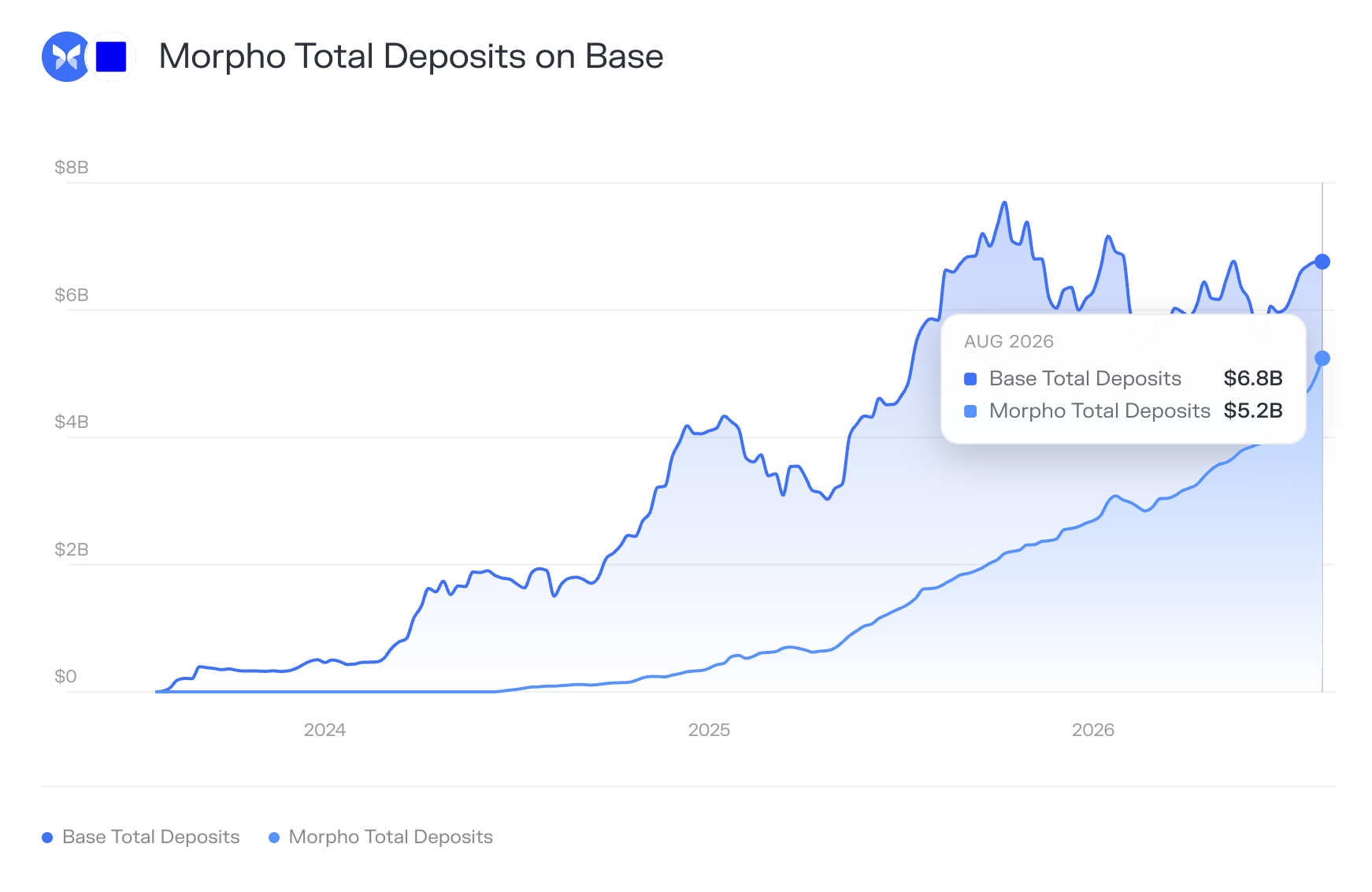
Morpho deployed on Base in May 2024, when the whole network held about 1.8 billion dollars in deposits. By August 2026, per Morpho's 6 August 2026 report, Base's total deposits had grown to 6.8 billion dollars, and Morpho alone held 5.2 billion of that — more than 70 percent of all deposits on the network. One lending protocol becoming the majority of a major chain's deposit base is the single most striking statistic in DeFi lending this year.
The composition of those deposits matters as much as the total. Roughly 26 percent of Morpho's Base deposits trace back to a single integration: Coinbase's crypto-backed loans.
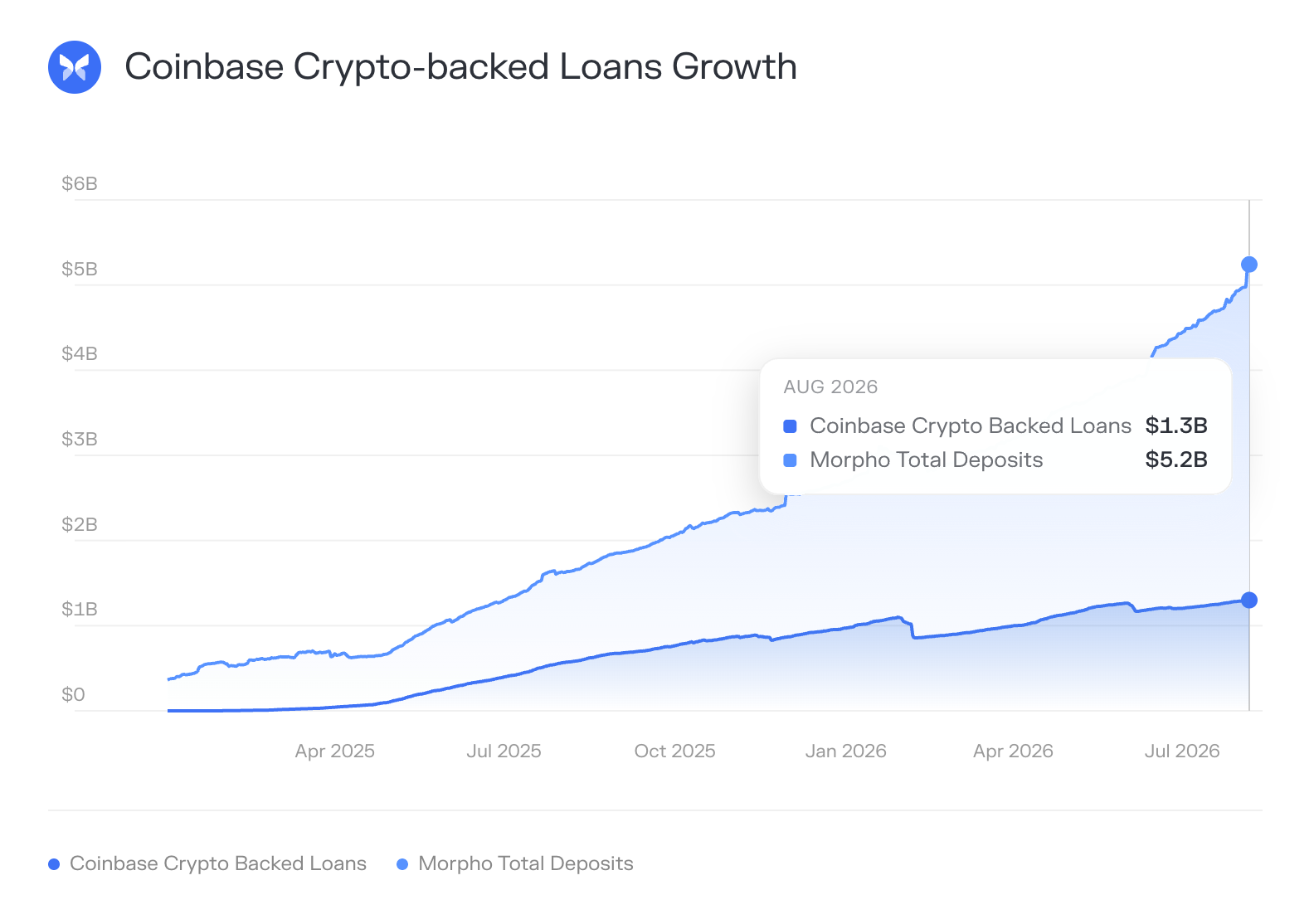
Coinbase launched crypto-backed loans in January 2025 and fully rolled the product out by May 2025. By August 2026 it had produced 1.3 billion dollars in outstanding USDC borrowing, backed by roughly 2.5 billion dollars of cbBTC collateral sitting in Morpho markets. Coinbase users never see Morpho; they see a loan button in an app they already use. The industry calls this pattern the DeFi mullet — fintech in the front, open protocol in the back — and it is quietly reshaping which platforms grow.
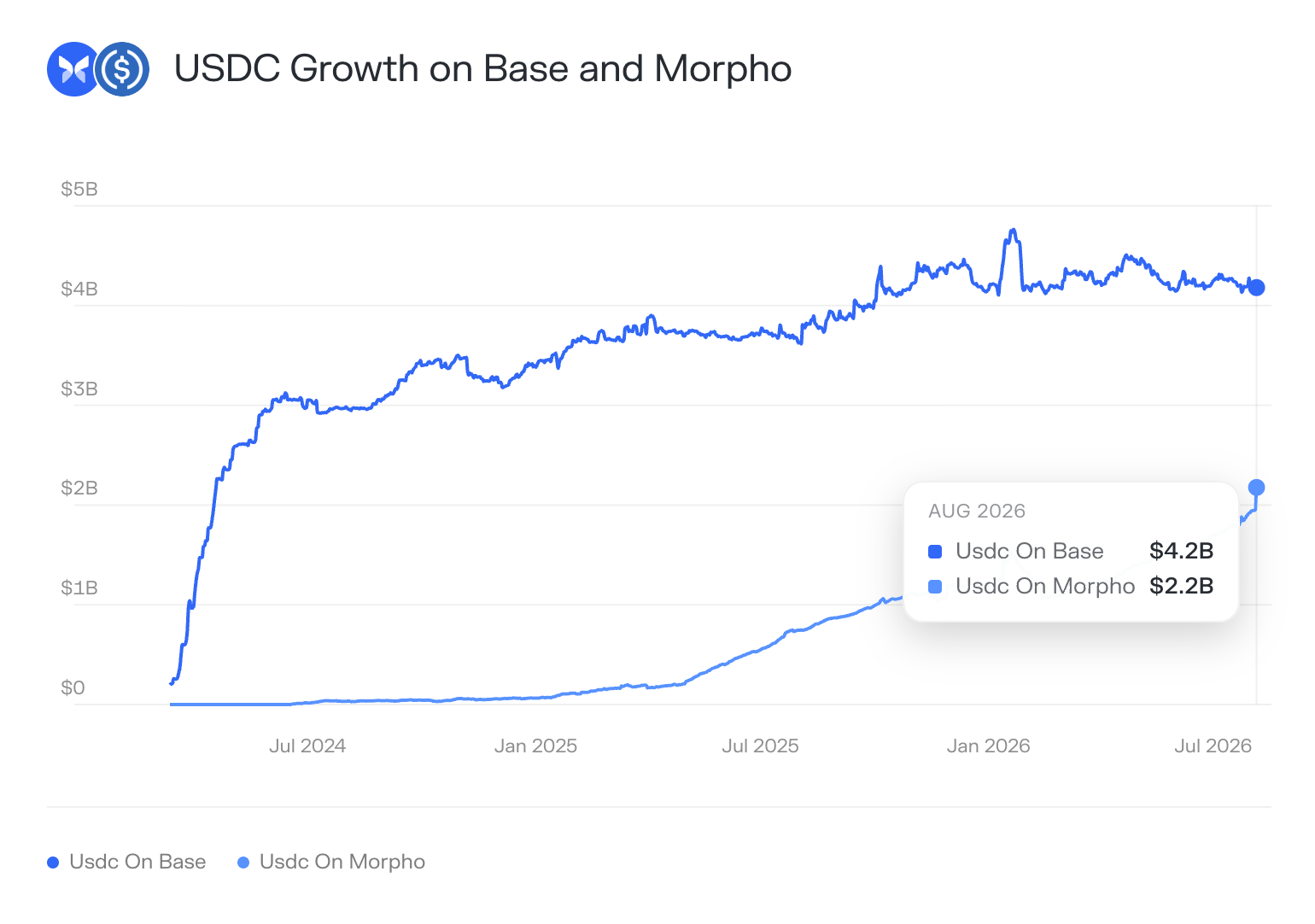
Stablecoin flows tell the same story from another angle. USDC on Base stood at 4.2 billion dollars in August 2026, and 2.2 billion of it — more than half — was deposited on Morpho earning lending yield rather than sitting idle in wallets.
None of this makes Morpho automatically the right choice for you. Aave remains the largest lending protocol across all chains combined, with the longest uninterrupted operating record of any major money market. What the Base data proves is narrower and more useful: the isolated-market-plus-curated-vault design has passed the market test at multi-billion-dollar scale, and fintech distribution is now a primary growth channel for lending infrastructure.
More in Lending & Borrowing
Comparing the major platforms side by side
Because no single public source compares these platforms on architecture, risk containment, and access model in one place, we compiled this table from Morpho's 6 August 2026 Base report, Morpho's 1 July 2026 Robinhood announcement, Aave's 29 March 2026 app guide, and the protocols' public documentation.
| Platform | Core design | Risk containment | Rate setting | Best fit |
|---|---|---|---|---|
| Aave | Shared pools, multiple markets | Per-market listing rules and collateral factors (86% Bluechip Prime vs 83% Main Core for WETH) | Utilization-based algorithm | Deep liquidity, blue-chip collateral, longest track record |
| Morpho | Isolated markets plus curated vaults | Losses confined to single markets; vault curator sets exposure | Per-market utilization curves | Stablecoin lenders who will vet a curator; institutions |
| Compound | Shared pools, single-borrowable-asset design (v3) | One borrowable asset per deployment limits contagion | Utilization-based algorithm | Conservative pooled lending at smaller scale |
| Coinbase or Robinhood front-ends | App interface over Morpho infrastructure | Same as underlying protocol, plus platform terms | Set by underlying markets, minus platform take | Beginners who value custody convenience over yield |
The last row deserves expansion, because it is where most new money now enters.
On 1 July 2026, Morpho announced that Robinhood Earn would run on its credit network. The product lets eligible Robinhood customers buy USDG, a dollar-pegged stablecoin, and lend it on-chain through a self-custody wallet inside the Robinhood app, with an estimated yield around 7 percent at launch. Steakhouse Financial curates the vault, borrowers post collateral from protocols including Spark, Ethena, and Maple, and Robinhood Chain settles the transactions.

Read that stack again, because it is the whole modern DeFi lending platform question in one product: a retail app most people already have, a stablecoin, a named vault curator, an open credit protocol, and a settlement chain. When you compare platforms in 2026, you are really choosing which layers of that stack you want to touch directly and which you want handled for you.
Going through a fintech front-end costs you something. The platform takes a margin, your asset choice narrows to what the app supports, and you inherit the platform's terms of service on top of protocol risk. Going direct pays you more and gives you full asset choice, but you carry wallet security, market selection, and monitoring yourself. Neither answer is wrong; they fit different people, which is the point of the next section.
Which platform fits your situation
"We are a two-person crypto treasury holding six figures of USDC that needs yield without drama." Split deposits between Aave's main market and one or two large Morpho vaults from an established curator. You get diversification across the two dominant architectures, and the isolated-market design means a failure in one Morpho market cannot reach your Aave position or vice versa. Check rates monthly, not daily, and review each vault's collateral roster quarterly — our stablecoin yield guide explains what those rates are actually paying you for.
"We are a household with some Coinbase Bitcoin and we want cash without selling it." You will probably be best served by the front-end route: Coinbase's loan product borrows USDC against your cbBTC through Morpho without you managing a wallet. You give up some rate for the convenience, and you must still respect liquidation math — the loan is overcollateralized and the collateral gets sold if its price falls too far. Read our guide on borrowing against crypto before you draw anything.
"We are a small fund that wants direct protocol exposure and can do real diligence." Go direct to Morpho markets or Aave, and treat curator and market selection as the actual work. Read the vault mandates, check the collateral factors per market — the kind of per-market detail shown in the Aave screenshots here — and size positions so that a single market failure is survivable. Our breakdown of DeFi lending risks covers the failure modes that should drive your sizing.
The platform landscape will change again next year. These checks will not.
First, ask where losses land. In a shared pool, bad debt from any collateral asset socializes across all lenders. In an isolated market, it stays put. Neither is automatically safer — a shared pool of only blue-chip collateral can beat an isolated market with junk collateral — but you must know which regime you are in.
Second, identify every human you are trusting. A Morpho vault has a named curator. An Aave market has a governance process that lists assets and sets factors. A fintech front-end adds a corporate counterparty. Write the list down; if you cannot name who can change the rules on your deposit, you have not finished your diligence.
Third, check the rate against the source of yield. Lending yield comes from borrowers paying interest, so a stablecoin rate far above what overcollateralized borrowers plausibly pay is being subsidized by token incentives or by risk you have not identified yet.
Fourth, look at liquidity depth and exit terms. Deep pools like Aave's main markets historically handle large withdrawals well; small isolated markets can leave you waiting when utilization spikes. Vaults inherit the exit behavior of the markets they allocate to.
Fifth, weigh operating history at scale. Aave has run the longest at the largest size. Morpho's design is newer but has now cleared billions in deposits with fintech integrations layered on top. Compound has run its pooled model for years at smaller scale. A billion dollars surviving a full market cycle is worth more than any audit badge.
Common mistakes when choosing a lending platform
- Chasing the highest advertised APY across platforms. The rate gap between major platforms for the same asset is usually small; the risk gap between a blue-chip market and an incentive-juiced exotic market is enormous. If a platform's headline rate is double everyone else's, the difference is compensation for something.
- Treating all vaults on one platform as equally safe. Two Morpho vaults can hold completely different collateral exposure under different curators. Two Aave markets can accept different assets at different collateral factors. The platform brand tells you the architecture, not the risk of your specific position.
- Ignoring the front-end layer entirely. People compare Aave versus Morpho for weeks, then deposit through a third-party app whose terms, custody model, and fee take they never read. If you access a protocol through Coinbase or Robinhood, that platform's terms are part of your risk stack.
- Confusing deposit growth with a guarantee. Morpho's 5.2 billion dollars on Base and Coinbase's 1.3 billion in loans prove the model works at scale; they do not make any individual market immune to bad debt. Size positions as if the worst market you touch can fail, because occasionally one does.
Frequently asked questions
What is the biggest DeFi lending platform right now?
Measured across all chains, Aave remains the largest lending protocol by total deposits. On specific networks the picture differs sharply: on Base, Morpho held about 5.2 billion dollars of the network's 6.8 billion in total deposits as of August 2026 — more than 70 percent — per Morpho's 6 August 2026 report.
Is Morpho safer than Aave?
They are differently safe. Morpho isolates each collateral-loan pair so one failing market cannot drain the others, but pushes risk selection onto vault curators. Aave shares liquidity across a pool, which socializes bad debt but concentrates governance and listing standards in one battle-tested process. A conservative position on either is safer than an aggressive position on the other.
Can I use DeFi lending platforms without managing a wallet?
Yes. Coinbase's crypto-backed loans and DeFi Earn products, and Robinhood Earn announced 1 July 2026, all run on Morpho infrastructure behind familiar app interfaces. You trade some yield and asset flexibility for convenience, and you add the platform's own terms to your risk stack.
Why are the interest rates different on each platform?
Rates are set per market by utilization: the share of deposited funds currently borrowed. Different platforms and different markets attract different borrower demand, so rates diverge. Persistent large gaps usually reflect token incentives or risk differences rather than free money.
Do I owe taxes on DeFi lending interest?
In most jurisdictions, yield from lending platforms is taxable income, and moving between tokens can create additional taxable events. Records are your responsibility — the protocols will not send you a form. Confirm treatment with a tax professional in your country before depositing meaningful size.
Sources
- Morpho, "$5B On Base Is The New Day One For Onchain Finance" — 6 August 2026. Base deposit totals, Morpho's 5.2 billion dollar share, Coinbase loan volumes and collateral, USDC on Base figures.
- Morpho, "Robinhood Chooses Morpho to Power New Earn Product" — 1 July 2026. Robinhood Earn structure: USDG, Steakhouse Financial curation, Robinhood Chain settlement, collateral sources.
- Aave, "Aave App User Guide" — 29 March 2026. Market structure, asset detail pages, and per-market collateral factors shown in the app screenshots.